 |
Open CASCADE Technology Reference Manual 8.0.0
|
Loading...
Searching...
No Matches
|
Open CASCADE Technology Reference Manual 8.0.0
|
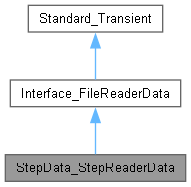
Specific FileReaderData for Step Contains literal description of entities (for each one : type as a string, ident, parameter list) provides references evaluation, plus access to literal data and specific access methods (Boolean, XY, XYZ) More...
#include <StepData_StepReaderData.hxx>
Public Member Functions | |
| StepData_StepReaderData (const int nbheader, const int nbtotal, const int nbpar, const Resource_FormatType theSourceCodePage=Resource_FormatType_UTF8) | |
| creates StepReaderData correctly dimensioned (necessary at creation time, because it contains arrays) nbheader is nb of records for Header, nbtotal for Header+Data and nbpar gives the total count of parameters | |
| void | SetRecord (const int num, const char *const ident, const char *const type, const int nbpar) |
| Fills the fields of a record. | |
| void | AddStepParam (const int num, const char *const aval, const Interface_ParamType atype, const int nument=0) |
| Fills the fields of a parameter of a record. This is a variant of AddParam, Adapted to STEP (optimized for specific values) | |
| const TCollection_AsciiString & | RecordType (const int num) const |
| Returns Record Type. | |
| const char * | CType (const int num) const |
| Returns Record Type as a CString was C++ : return const. | |
| int | RecordIdent (const int num) const |
| Returns record identifier (Positive number) If returned ident is not positive : Sub-List or Scope mark. | |
| int | SubListNumber (const int num, const int nump, const bool aslast) const |
| Returns SubList numero designated by a parameter (nump) in a record (num), or zero if the parameter does not exist or is not a SubList address. Zero too If aslast is True and nump is not for the last parameter. | |
| bool | IsComplex (const int num) const |
| Returns True if <num> corresponds to a Complex Type Entity (as can be defined by ANDOR Express clause) | |
| void | ComplexType (const int num, NCollection_Sequence< TCollection_AsciiString > &types) const |
| Returns the List of Types which correspond to a Complex Type Entity. If not Complex, there is just one Type in it For a SubList or a Scope mark, <types> remains empty. | |
| int | NextForComplex (const int num) const |
| Returns the Next "Component" for a Complex Type Entity, of which <num> is already a Component (the first one or a next one) Returns 0 for a Simple Type or for the last Component. | |
| bool | NamedForComplex (const char *const name, const int num0, int &num, occ::handle< Interface_Check > &ach) const |
| Determines the first component which brings a given name, for a Complex Type Entity <num0> is the very first record of this entity <num> is given the last NextNamedForComplex, starts at zero it is returned as the newly found number Hence, in the normal case, NextNamedForComplex starts by num0 if <num> is zero, else by NextForComplex(num) If the alphabetic order is not respected, it restarts from num0 and loops on NextForComplex until finding <name> In case of "non-alphabetic order", <ach> is filled with a Warning for this name In case of "not-found at all", <ach> is filled with a Fail, and <num> is returned as zero. | |
| bool | NamedForComplex (const char *const theName, const char *const theShortName, const int num0, int &num, occ::handle< Interface_Check > &ach) const |
| Determines the first component which brings a given name, or short name for a Complex Type Entity <num0> is the very first record of this entity <num> is given the last NextNamedForComplex, starts at zero it is returned as the newly found number Hence, in the normal case, NextNamedForComplex starts by num0 if <num> is zero, else by NextForComplex(num) If the alphabetic order is not respected, it restarts from num0 and loops on NextForComplex until finding <name> In case of "non-alphabetic order", <ach> is filled with a Warning for this name In case of "not-found at all", <ach> is filled with a Fail, and <num> is returned as zero. | |
| bool | CheckNbParams (const int num, const int nbreq, occ::handle< Interface_Check > &ach, const char *const mess="") const |
| Checks Count of Parameters of record <num> to equate <nbreq> If this Check is successful, returns True Else, fills <ach> with an Error Message then returns False <mess> is included in the Error message if given non empty. | |
| bool | ReadSubList (const int num, const int nump, const char *const mess, occ::handle< Interface_Check > &ach, int &numsub, const bool optional=false, const int lenmin=0, const int lenmax=0) const |
| reads parameter <nump> of record <num> as a sub-list (may be typed, see ReadTypedParameter in this case) Returns True if OK. Else (not a LIST), returns false and feeds Check with appropriate check If <optional> is True and Param is not defined, returns True with <ach> not filled and <numsub> returned as 0 Works with SubListNumber with <aslast> false (no specific case for last parameter) | |
| int | ReadSub (const int numsub, const char *const mess, occ::handle< Interface_Check > &ach, const occ::handle< StepData_PDescr > &descr, occ::handle< Standard_Transient > &val) const |
| reads the content of a sub-list into a transient : SelectNamed, or HArray1 of Integer,Real,String,Transient ... recursive call if list of list ... If a sub-list has mixed types, an HArray1OfTransient is produced, it may contain SelectMember Intended to be called by ReadField The returned status is : negative if failed, 0 if empty. Else the kind to be recorded in the field | |
| bool | ReadMember (const int num, const int nump, const char *const mess, occ::handle< Interface_Check > &ach, occ::handle< StepData_SelectMember > &val) const |
| Reads parameter <nump> of record <num> into a SelectMember, self-sufficient (no Description needed) If <val> is already created, it will be filled, as possible And if reading does not match its own description, the result will be False If <val> is not it not yet created, it will be (SelectNamed) useful if a field is defined as a SelectMember, directly (SELECT with no Entity as member) But SelectType also manages SelectMember (for SELECT with some members as Entity, some other not) | |
| template<class T > | |
| bool | ReadMember (const int num, const int nump, const char *const mess, occ::handle< Interface_Check > &ach, occ::handle< T > &val) const |
| Safe variant for arbitrary type of argument. | |
| bool | ReadField (const int num, const int nump, const char *const mess, occ::handle< Interface_Check > &ach, const occ::handle< StepData_PDescr > &descr, StepData_Field &fild) const |
| reads parameter <nump> of record <num> into a Field, controlled by a Parameter Descriptor (PDescr), which controls its allowed type(s) and value <ach> is filled if the read parameter does not match its description (but the field is read anyway) If the description is not defined, no control is done Returns True when done | |
| bool | ReadList (const int num, occ::handle< Interface_Check > &ach, const occ::handle< StepData_ESDescr > &descr, StepData_FieldList &list) const |
| reads a list of fields controlled by an ESDescr | |
| bool | ReadAny (const int num, const int nump, const char *const mess, occ::handle< Interface_Check > &ach, const occ::handle< StepData_PDescr > &descr, occ::handle< Standard_Transient > &val) const |
| Reads parameter <nump> of record <num> into a Transient Value according to the type of the parameter : Named for Integer,Boolean,Logical,Enum,Real : SelectNamed Immediate Integer,Boolean,Logical,Enum,Real : SelectInt/Real Text : HAsciiString Ident : the referenced Entity Sub-List not processed, see ReadSub This value is controlled by a Parameter Descriptor (PDescr), which controls its allowed type and value <ach> is filled if the read parameter does not match its description (the select is nevertheless created if possible) | |
| bool | ReadXY (const int num, const int nump, const char *const mess, occ::handle< Interface_Check > &ach, double &X, double &Y) const |
| reads parameter <nump> of record <num> as a sub-list of two Reals X,Y. Returns True if OK. Else, returns false and feeds Check with appropriate Fails (parameter not a sub-list, not two Reals in the sub-list) composed with "mess" which gives the name of the parameter | |
| bool | ReadXYZ (const int num, const int nump, const char *const mess, occ::handle< Interface_Check > &ach, double &X, double &Y, double &Z) const |
| reads parameter <nump> of record <num> as a sub-list of three Reals X,Y,Z. Return value and Check managed as by ReadXY (demands a sub-list of three Reals) | |
| bool | ReadReal (const int num, const int nump, const char *const mess, occ::handle< Interface_Check > &ach, double &val) const |
| reads parameter <nump> of record <num> as a single Real value. Return value and Check managed as by ReadXY (demands a Real) | |
| bool | ReadEntity (const int num, const int nump, const char *const mess, occ::handle< Interface_Check > &ach, const occ::handle< Standard_Type > &atype, occ::handle< Standard_Transient > &ent) const |
| Reads parameter <nump> of record <num> as a single Entity. Return value and Check managed as by ReadReal (demands a reference to an Entity). In Addition, demands read Entity to be Kind of a required Type <atype>. Remark that returned status is False and <ent> is Null if parameter is not an Entity, <ent> remains Not Null is parameter is an Entity but is not Kind of required type. | |
| template<class T > | |
| bool | ReadEntity (const int num, const int nump, const char *const mess, occ::handle< Interface_Check > &ach, const occ::handle< Standard_Type > &atype, occ::handle< T > &ent) const |
| Safe variant for arbitrary type of argument. | |
| bool | ReadEntity (const int num, const int nump, const char *const mess, occ::handle< Interface_Check > &ach, StepData_SelectType &sel) const |
| Same as above, but a SelectType checks Type Matching, and records the read Entity (see method Value from SelectType) | |
| bool | ReadInteger (const int num, const int nump, const char *const mess, occ::handle< Interface_Check > &ach, int &val) const |
| reads parameter <nump> of record <num> as a single Integer. Return value & Check managed as by ReadXY (demands an Integer) | |
| bool | ReadBoolean (const int num, const int nump, const char *const mess, occ::handle< Interface_Check > &ach, bool &flag) const |
| reads parameter <nump> of record <num> as a Boolean Return value and Check managed as by ReadReal (demands a Boolean enum, i.e. text ".T." for True or ".F." for False) | |
| bool | ReadLogical (const int num, const int nump, const char *const mess, occ::handle< Interface_Check > &ach, StepData_Logical &flag) const |
| reads parameter <nump> of record <num> as a Logical Return value and Check managed as by ReadBoolean (demands a Logical enum, i.e. text ".T.", ".F.", or ".U.") | |
| bool | ReadString (const int num, const int nump, const char *const mess, occ::handle< Interface_Check > &ach, occ::handle< TCollection_HAsciiString > &val) const |
| reads parameter <nump> of record <num> as a String (text between quotes, quotes are removed by the Read operation) Return value and Check managed as by ReadXY (demands a String) | |
| bool | ReadEnumParam (const int num, const int nump, const char *const mess, occ::handle< Interface_Check > &ach, const char *&text) const |
| void | FailEnumValue (const int num, const int nump, const char *const mess, occ::handle< Interface_Check > &ach) const |
| Fills a check with a fail message if enumeration value does match parameter definition Just a help to centralize message definitions. | |
| bool | ReadEnum (const int num, const int nump, const char *const mess, occ::handle< Interface_Check > &ach, const StepData_EnumTool &enumtool, int &val) const |
| Reads parameter <nump> of record <num> as an Enumeration (text between dots) and converts it to an integer value, by an EnumTool. Returns True if OK, false if : this parameter is not enumeration, or is not recognized by the EnumTool (with fail) | |
| bool | ReadTypedParam (const int num, const int nump, const bool mustbetyped, const char *const mess, occ::handle< Interface_Check > &ach, int &numr, int &numrp, TCollection_AsciiString &typ) const |
| Resolves a parameter which can be enclosed in a type def., as TYPE(val). The parameter must then be read normally according its type. Parameter to be resolved is <nump> of record <num> <mustbetyped> True demands a typed parameter <mustbetyped> False accepts a non-typed parameter as option mess and ach as usual <numr>,<numrp> are the resolved record and parameter numbers = num,nump if no type, else numrp=1 <typ> returns the recorded type, or empty string Remark : a non-typed list is considered as "non-typed". | |
| bool | CheckDerived (const int num, const int nump, const char *const mess, occ::handle< Interface_Check > &ach, const bool errstat=false) const |
| Checks if parameter <nump> of record <num> is given as Derived If this Check is successful (i.e. Param = "*"), returns True Else, fills <ach> with a Message which contains <mess> and returns False. According to <errstat>, this message is Warning if errstat is False (Default), Fail if errstat is True. | |
| int | NbEntities () const override |
| Returns total count of Entities (including Header) | |
| int | FindNextRecord (const int num) const override |
| determines the first suitable record following a given one that is, skips SCOPE,ENDSCOPE and SUBLIST records Note : skips Header records, which are accessed separately | |
| void | SetEntityNumbers (const bool withmap=true) |
| determines reference numbers in EntityNumber fields called by Prepare from StepReaderTool to prepare later using by a StepModel. This method is attached to StepReaderData because it needs a massive amount of data accesses to work | |
| int | FindNextHeaderRecord (const int num) const |
| determine first suitable record of Header works as FindNextRecord, but treats only Header records | |
| void | PrepareHeader () |
| Works as SetEntityNumbers but for Header : more simple because there are no Reference, only Sub-Lists. | |
| const occ::handle< Interface_Check > | GlobalCheck () const |
| Returns the Global Check. It can record Fail messages about Undefined References (detected by SetEntityNumbers) | |
 Public Member Functions inherited from Interface_FileReaderData Public Member Functions inherited from Interface_FileReaderData | |
| virtual int | NbRecords () const |
| Returns the count of registered records That is, value given for Initialization (can be redefined) | |
| void | InitParams (const int num) |
| attaches an empty ParamList to a Record | |
| void | AddParam (const int num, const char *const aval, const Interface_ParamType atype, const int nument=0) |
| Adds a parameter to record no "num" and fills its fields (EntityNumber is optional) Warning : <aval> is assumed to be memory-managed elsewhere : it is NOT copied. This gives a best speed : strings remain stored in pages of characters. | |
| void | AddParam (const int num, const TCollection_AsciiString &aval, const Interface_ParamType atype, const int nument=0) |
| Same as above, but gets a AsciiString from TCollection Remark that the content of the AsciiString is locally copied (because its content is most often lost after using) | |
| void | AddParam (const int num, const Interface_FileParameter &FP) |
| Same as above, but gets a complete FileParameter Warning : Content of <FP> is NOT copied : its original address and space in memory are assumed to be managed elsewhere (see ParamSet) | |
| void | SetParam (const int num, const int nump, const Interface_FileParameter &FP) |
| Sets a new value for a parameter of a record, given by : num : record number; nump : parameter number in the record. | |
| int | NbParams (const int num) const |
| Returns count of parameters attached to record "num" If <num> = 0, returns the total recorded count of parameters. | |
| occ::handle< Interface_ParamList > | Params (const int num) const |
| Returns the complete ParamList of a record (read only) num = 0 to return the whole param list for the file. | |
| const Interface_FileParameter & | Param (const int num, const int nump) const |
| Returns parameter "nump" of record "num", as a complete FileParameter. | |
| Interface_FileParameter & | ChangeParam (const int num, const int nump) |
| Same as above, but in order to be modified on place. | |
| Interface_ParamType | ParamType (const int num, const int nump) const |
| Returns type of parameter "nump" of record "num" Returns literal value of parameter "nump" of record "num" was C++ : return const &. | |
| const char * | ParamCValue (const int num, const int nump) const |
| Same as above, but as a CString was C++ : return const. | |
| bool | IsParamDefined (const int num, const int nump) const |
| Returns True if parameter "nump" of record "num" is defined (it is not if its type is ParamVoid) | |
| int | ParamNumber (const int num, const int nump) const |
| Returns record number of an entity referenced by a parameter of type Ident; 0 if no EntityNumber has been determined Note that it is used to reference Entities but also Sublists (sublists are not objects, but internal descriptions) | |
| const occ::handle< Standard_Transient > & | ParamEntity (const int num, const int nump) const |
| Returns the StepEntity referenced by a parameter Error if none. | |
| int | ParamFirstRank (const int num) const |
| Returns the absolute rank of the beginning of a record (its list is from ParamFirstRank+1 to ParamFirstRank+NbParams) | |
| const occ::handle< Standard_Transient > & | BoundEntity (const int num) const |
| Returns the entity bound to a record, set by SetEntities. | |
| void | BindEntity (const int num, const occ::handle< Standard_Transient > &ent) |
| Binds an entity to a record. | |
| void | SetErrorLoad (const bool val) |
| Sets the status "Error Load" on, to overside check fails <val> True : declares unloaded <val> False : declares loaded If not called before loading (see FileReaderTool), check fails give the status IsErrorLoad says if SetErrorLoad has been called by user ResetErrorLoad resets it (called by FileReaderTool) This allows to specify that the currently loaded entity remains unloaded (because of syntactic fail) | |
| bool | IsErrorLoad () const |
| Returns True if the status "Error Load" has been set (to True or False) | |
| bool | ResetErrorLoad () |
| Returns the former value of status "Error Load" then resets it Used to read the status then ensure it is reset. | |
| void | Destroy () |
| Destructor (waiting for memory management) | |
| ~Interface_FileReaderData () override | |
| Public Member Functions inherited from Standard_Transient | |
| Standard_Transient () | |
| Empty constructor. | |
| Standard_Transient (const Standard_Transient &) | |
| Copy constructor – does nothing. | |
| Standard_Transient & | operator= (const Standard_Transient &) |
| Assignment operator, needed to avoid copying reference counter. | |
| virtual | ~Standard_Transient ()=default |
| Destructor must be virtual. | |
| virtual const opencascade::handle< Standard_Type > & | DynamicType () const |
| Returns a type descriptor about this object. | |
| bool | IsInstance (const opencascade::handle< Standard_Type > &theType) const |
| Returns a true value if this is an instance of Type. | |
| bool | IsInstance (const char *const theTypeName) const |
| Returns a true value if this is an instance of TypeName. | |
| bool | IsKind (const opencascade::handle< Standard_Type > &theType) const |
| Returns true if this is an instance of Type or an instance of any class that inherits from Type. Note that multiple inheritance is not supported by OCCT RTTI mechanism. | |
| bool | IsKind (const char *const theTypeName) const |
| Returns true if this is an instance of TypeName or an instance of any class that inherits from TypeName. Note that multiple inheritance is not supported by OCCT RTTI mechanism. | |
| Standard_Transient * | This () const |
| Returns non-const pointer to this object (like const_cast). For protection against creating handle to objects allocated in stack or call from constructor, it will raise exception Standard_ProgramError if reference counter is zero. | |
| int | GetRefCount () const noexcept |
| Get the reference counter of this object. | |
| void | IncrementRefCounter () noexcept |
| Increments the reference counter of this object. Uses relaxed memory ordering since incrementing only requires atomicity, not synchronization with other memory operations. | |
| int | DecrementRefCounter () noexcept |
| Decrements the reference counter of this object; returns the decremented value. Uses release ordering for the decrement to ensure all writes to the object are visible before the count reaches zero. An acquire fence is added only when the count reaches zero, ensuring proper synchronization before deletion. This is more efficient than using acq_rel for every decrement. | |
| virtual void | Delete () const |
| Memory deallocator for transient classes. | |
Additional Inherited Members | |
| Public Types inherited from Standard_Transient | |
| typedef void | base_type |
| Returns a type descriptor about this object. | |
| Static Public Member Functions inherited from Interface_FileReaderData | |
| static double | Fastof (const char *const str) |
| Same spec.s as standard <atof> but 5 times faster. | |
| Static Public Member Functions inherited from Standard_Transient | |
| static constexpr const char * | get_type_name () |
| Returns a type descriptor about this object. | |
| static const opencascade::handle< Standard_Type > & | get_type_descriptor () |
| Returns type descriptor of Standard_Transient class. | |
| Protected Member Functions inherited from Interface_FileReaderData | |
| Interface_FileReaderData (const int nbr, const int npar) | |
| Initializes arrays of Entities and of ParamLists attached to registered records <nbr> must be the maximum number of records to get (no way to extend it at run-time) : count entities and sub-entities ... <npar> is the total count of parameters (if it is not exact, it will be extended as necessary) | |
| Interface_FileParameter & | ChangeParameter (const int numpar) |
| Returns a parameter given its absolute rank in the file in order to be consulted or modified in specilaized actions. | |
| void | ParamPosition (const int numpar, int &num, int &nump) const |
| For a given absolute rank of parameter, determines the record to which its belongs, and the parameter number for it. | |
Specific FileReaderData for Step Contains literal description of entities (for each one : type as a string, ident, parameter list) provides references evaluation, plus access to literal data and specific access methods (Boolean, XY, XYZ)
| StepData_StepReaderData::StepData_StepReaderData | ( | const int | nbheader, |
| const int | nbtotal, | ||
| const int | nbpar, | ||
| const Resource_FormatType | theSourceCodePage = Resource_FormatType_UTF8 ) |
creates StepReaderData correctly dimensioned (necessary at creation time, because it contains arrays) nbheader is nb of records for Header, nbtotal for Header+Data and nbpar gives the total count of parameters
| void StepData_StepReaderData::AddStepParam | ( | const int | num, |
| const char *const | aval, | ||
| const Interface_ParamType | atype, | ||
| const int | nument = 0 ) |
Fills the fields of a parameter of a record. This is a variant of AddParam, Adapted to STEP (optimized for specific values)
| bool StepData_StepReaderData::CheckDerived | ( | const int | num, |
| const int | nump, | ||
| const char *const | mess, | ||
| occ::handle< Interface_Check > & | ach, | ||
| const bool | errstat = false ) const |
Checks if parameter <nump> of record <num> is given as Derived If this Check is successful (i.e. Param = "*"), returns True Else, fills <ach> with a Message which contains <mess> and returns False. According to <errstat>, this message is Warning if errstat is False (Default), Fail if errstat is True.
| bool StepData_StepReaderData::CheckNbParams | ( | const int | num, |
| const int | nbreq, | ||
| occ::handle< Interface_Check > & | ach, | ||
| const char *const | mess = "" ) const |
Checks Count of Parameters of record <num> to equate <nbreq> If this Check is successful, returns True Else, fills <ach> with an Error Message then returns False <mess> is included in the Error message if given non empty.
| void StepData_StepReaderData::ComplexType | ( | const int | num, |
| NCollection_Sequence< TCollection_AsciiString > & | types ) const |
Returns the List of Types which correspond to a Complex Type Entity. If not Complex, there is just one Type in it For a SubList or a Scope mark, <types> remains empty.
Returns Record Type as a CString was C++ : return const.
| void StepData_StepReaderData::FailEnumValue | ( | const int | num, |
| const int | nump, | ||
| const char *const | mess, | ||
| occ::handle< Interface_Check > & | ach ) const |
Fills a check with a fail message if enumeration value does match parameter definition Just a help to centralize message definitions.
determine first suitable record of Header works as FindNextRecord, but treats only Header records
determines the first suitable record following a given one that is, skips SCOPE,ENDSCOPE and SUBLIST records Note : skips Header records, which are accessed separately
Implements Interface_FileReaderData.
| const occ::handle< Interface_Check > StepData_StepReaderData::GlobalCheck | ( | ) | const |
Returns the Global Check. It can record Fail messages about Undefined References (detected by SetEntityNumbers)
Returns True if <num> corresponds to a Complex Type Entity (as can be defined by ANDOR Express clause)
| bool StepData_StepReaderData::NamedForComplex | ( | const char *const | name, |
| const int | num0, | ||
| int & | num, | ||
| occ::handle< Interface_Check > & | ach ) const |
Determines the first component which brings a given name, for a Complex Type Entity <num0> is the very first record of this entity <num> is given the last NextNamedForComplex, starts at zero it is returned as the newly found number Hence, in the normal case, NextNamedForComplex starts by num0 if <num> is zero, else by NextForComplex(num) If the alphabetic order is not respected, it restarts from num0 and loops on NextForComplex until finding <name> In case of "non-alphabetic order", <ach> is filled with a Warning for this name In case of "not-found at all", <ach> is filled with a Fail, and <num> is returned as zero.
Returns True if alphabetic order, False else
| bool StepData_StepReaderData::NamedForComplex | ( | const char *const | theName, |
| const char *const | theShortName, | ||
| const int | num0, | ||
| int & | num, | ||
| occ::handle< Interface_Check > & | ach ) const |
Determines the first component which brings a given name, or short name for a Complex Type Entity <num0> is the very first record of this entity <num> is given the last NextNamedForComplex, starts at zero it is returned as the newly found number Hence, in the normal case, NextNamedForComplex starts by num0 if <num> is zero, else by NextForComplex(num) If the alphabetic order is not respected, it restarts from num0 and loops on NextForComplex until finding <name> In case of "non-alphabetic order", <ach> is filled with a Warning for this name In case of "not-found at all", <ach> is filled with a Fail, and <num> is returned as zero.
Returns True if alphabetic order, False else
|
overridevirtual |
Returns total count of Entities (including Header)
Reimplemented from Interface_FileReaderData.
Returns the Next "Component" for a Complex Type Entity, of which <num> is already a Component (the first one or a next one) Returns 0 for a Simple Type or for the last Component.
| void StepData_StepReaderData::PrepareHeader | ( | ) |
Works as SetEntityNumbers but for Header : more simple because there are no Reference, only Sub-Lists.
| bool StepData_StepReaderData::ReadAny | ( | const int | num, |
| const int | nump, | ||
| const char *const | mess, | ||
| occ::handle< Interface_Check > & | ach, | ||
| const occ::handle< StepData_PDescr > & | descr, | ||
| occ::handle< Standard_Transient > & | val ) const |
Reads parameter <nump> of record <num> into a Transient Value according to the type of the parameter : Named for Integer,Boolean,Logical,Enum,Real : SelectNamed Immediate Integer,Boolean,Logical,Enum,Real : SelectInt/Real Text : HAsciiString Ident : the referenced Entity Sub-List not processed, see ReadSub This value is controlled by a Parameter Descriptor (PDescr), which controls its allowed type and value <ach> is filled if the read parameter does not match its description (the select is nevertheless created if possible)
Warning : val is in out, hence it is possible to predefine a specific SelectMember then to fill it. If <val> is Null or if the result is not a SelectMember, val itself is returned a new ref For a Select with a Name, <val> must then be a SelectNamed
| bool StepData_StepReaderData::ReadBoolean | ( | const int | num, |
| const int | nump, | ||
| const char *const | mess, | ||
| occ::handle< Interface_Check > & | ach, | ||
| bool & | flag ) const |
reads parameter <nump> of record <num> as a Boolean Return value and Check managed as by ReadReal (demands a Boolean enum, i.e. text ".T." for True or ".F." for False)
| bool StepData_StepReaderData::ReadEntity | ( | const int | num, |
| const int | nump, | ||
| const char *const | mess, | ||
| occ::handle< Interface_Check > & | ach, | ||
| const occ::handle< Standard_Type > & | atype, | ||
| occ::handle< Standard_Transient > & | ent ) const |
Reads parameter <nump> of record <num> as a single Entity. Return value and Check managed as by ReadReal (demands a reference to an Entity). In Addition, demands read Entity to be Kind of a required Type <atype>. Remark that returned status is False and <ent> is Null if parameter is not an Entity, <ent> remains Not Null is parameter is an Entity but is not Kind of required type.
|
inline |
Safe variant for arbitrary type of argument.
| bool StepData_StepReaderData::ReadEntity | ( | const int | num, |
| const int | nump, | ||
| const char *const | mess, | ||
| occ::handle< Interface_Check > & | ach, | ||
| StepData_SelectType & | sel ) const |
Same as above, but a SelectType checks Type Matching, and records the read Entity (see method Value from SelectType)
| bool StepData_StepReaderData::ReadEnum | ( | const int | num, |
| const int | nump, | ||
| const char *const | mess, | ||
| occ::handle< Interface_Check > & | ach, | ||
| const StepData_EnumTool & | enumtool, | ||
| int & | val ) const |
Reads parameter <nump> of record <num> as an Enumeration (text between dots) and converts it to an integer value, by an EnumTool. Returns True if OK, false if : this parameter is not enumeration, or is not recognized by the EnumTool (with fail)
| bool StepData_StepReaderData::ReadEnumParam | ( | const int | num, |
| const int | nump, | ||
| const char *const | mess, | ||
| occ::handle< Interface_Check > & | ach, | ||
| const char *& | text ) const |
| bool StepData_StepReaderData::ReadField | ( | const int | num, |
| const int | nump, | ||
| const char *const | mess, | ||
| occ::handle< Interface_Check > & | ach, | ||
| const occ::handle< StepData_PDescr > & | descr, | ||
| StepData_Field & | fild ) const |
reads parameter <nump> of record <num> into a Field, controlled by a Parameter Descriptor (PDescr), which controls its allowed type(s) and value <ach> is filled if the read parameter does not match its description (but the field is read anyway) If the description is not defined, no control is done Returns True when done
| bool StepData_StepReaderData::ReadInteger | ( | const int | num, |
| const int | nump, | ||
| const char *const | mess, | ||
| occ::handle< Interface_Check > & | ach, | ||
| int & | val ) const |
reads parameter <nump> of record <num> as a single Integer. Return value & Check managed as by ReadXY (demands an Integer)
| bool StepData_StepReaderData::ReadList | ( | const int | num, |
| occ::handle< Interface_Check > & | ach, | ||
| const occ::handle< StepData_ESDescr > & | descr, | ||
| StepData_FieldList & | list ) const |
reads a list of fields controlled by an ESDescr
| bool StepData_StepReaderData::ReadLogical | ( | const int | num, |
| const int | nump, | ||
| const char *const | mess, | ||
| occ::handle< Interface_Check > & | ach, | ||
| StepData_Logical & | flag ) const |
reads parameter <nump> of record <num> as a Logical Return value and Check managed as by ReadBoolean (demands a Logical enum, i.e. text ".T.", ".F.", or ".U.")
| bool StepData_StepReaderData::ReadMember | ( | const int | num, |
| const int | nump, | ||
| const char *const | mess, | ||
| occ::handle< Interface_Check > & | ach, | ||
| occ::handle< StepData_SelectMember > & | val ) const |
Reads parameter <nump> of record <num> into a SelectMember, self-sufficient (no Description needed) If <val> is already created, it will be filled, as possible And if reading does not match its own description, the result will be False If <val> is not it not yet created, it will be (SelectNamed) useful if a field is defined as a SelectMember, directly (SELECT with no Entity as member) But SelectType also manages SelectMember (for SELECT with some members as Entity, some other not)
|
inline |
Safe variant for arbitrary type of argument.
| bool StepData_StepReaderData::ReadReal | ( | const int | num, |
| const int | nump, | ||
| const char *const | mess, | ||
| occ::handle< Interface_Check > & | ach, | ||
| double & | val ) const |
reads parameter <nump> of record <num> as a single Real value. Return value and Check managed as by ReadXY (demands a Real)
| bool StepData_StepReaderData::ReadString | ( | const int | num, |
| const int | nump, | ||
| const char *const | mess, | ||
| occ::handle< Interface_Check > & | ach, | ||
| occ::handle< TCollection_HAsciiString > & | val ) const |
reads parameter <nump> of record <num> as a String (text between quotes, quotes are removed by the Read operation) Return value and Check managed as by ReadXY (demands a String)
| int StepData_StepReaderData::ReadSub | ( | const int | numsub, |
| const char *const | mess, | ||
| occ::handle< Interface_Check > & | ach, | ||
| const occ::handle< StepData_PDescr > & | descr, | ||
| occ::handle< Standard_Transient > & | val ) const |
reads the content of a sub-list into a transient : SelectNamed, or HArray1 of Integer,Real,String,Transient ... recursive call if list of list ... If a sub-list has mixed types, an HArray1OfTransient is produced, it may contain SelectMember Intended to be called by ReadField The returned status is : negative if failed, 0 if empty. Else the kind to be recorded in the field
| bool StepData_StepReaderData::ReadSubList | ( | const int | num, |
| const int | nump, | ||
| const char *const | mess, | ||
| occ::handle< Interface_Check > & | ach, | ||
| int & | numsub, | ||
| const bool | optional = false, | ||
| const int | lenmin = 0, | ||
| const int | lenmax = 0 ) const |
reads parameter <nump> of record <num> as a sub-list (may be typed, see ReadTypedParameter in this case) Returns True if OK. Else (not a LIST), returns false and feeds Check with appropriate check If <optional> is True and Param is not defined, returns True with <ach> not filled and <numsub> returned as 0 Works with SubListNumber with <aslast> false (no specific case for last parameter)
| bool StepData_StepReaderData::ReadTypedParam | ( | const int | num, |
| const int | nump, | ||
| const bool | mustbetyped, | ||
| const char *const | mess, | ||
| occ::handle< Interface_Check > & | ach, | ||
| int & | numr, | ||
| int & | numrp, | ||
| TCollection_AsciiString & | typ ) const |
Resolves a parameter which can be enclosed in a type def., as TYPE(val). The parameter must then be read normally according its type. Parameter to be resolved is <nump> of record <num> <mustbetyped> True demands a typed parameter <mustbetyped> False accepts a non-typed parameter as option mess and ach as usual <numr>,<numrp> are the resolved record and parameter numbers = num,nump if no type, else numrp=1 <typ> returns the recorded type, or empty string Remark : a non-typed list is considered as "non-typed".
| bool StepData_StepReaderData::ReadXY | ( | const int | num, |
| const int | nump, | ||
| const char *const | mess, | ||
| occ::handle< Interface_Check > & | ach, | ||
| double & | X, | ||
| double & | Y ) const |
reads parameter <nump> of record <num> as a sub-list of two Reals X,Y. Returns True if OK. Else, returns false and feeds Check with appropriate Fails (parameter not a sub-list, not two Reals in the sub-list) composed with "mess" which gives the name of the parameter
| bool StepData_StepReaderData::ReadXYZ | ( | const int | num, |
| const int | nump, | ||
| const char *const | mess, | ||
| occ::handle< Interface_Check > & | ach, | ||
| double & | X, | ||
| double & | Y, | ||
| double & | Z ) const |
reads parameter <nump> of record <num> as a sub-list of three Reals X,Y,Z. Return value and Check managed as by ReadXY (demands a sub-list of three Reals)
Returns record identifier (Positive number) If returned ident is not positive : Sub-List or Scope mark.
| const TCollection_AsciiString & StepData_StepReaderData::RecordType | ( | const int | num | ) | const |
Returns Record Type.
determines reference numbers in EntityNumber fields called by Prepare from StepReaderTool to prepare later using by a StepModel. This method is attached to StepReaderData because it needs a massive amount of data accesses to work
If <withmap> is given False, the basic exploration algorithm is activated, otherwise a map is used as far as it is possible this option can be used only to test this algorithm
| void StepData_StepReaderData::SetRecord | ( | const int | num, |
| const char *const | ident, | ||
| const char *const | type, | ||
| const int | nbpar ) |
Fills the fields of a record.
| int StepData_StepReaderData::SubListNumber | ( | const int | num, |
| const int | nump, | ||
| const bool | aslast ) const |
Returns SubList numero designated by a parameter (nump) in a record (num), or zero if the parameter does not exist or is not a SubList address. Zero too If aslast is True and nump is not for the last parameter.
 1.10.0