Computes the global properties of a geometric solid (3D closed region of space) delimited with : . a surface . a point and a surface . a plane and a surface.
More...
|
| | BRepGProp_Vinert () |
| |
| | BRepGProp_Vinert (const BRepGProp_Face &S, const gp_Pnt &VLocation) |
| | Computes the global properties of a region of 3D space delimited with the surface and the point VLocation. S can be closed The method is quick and its precision is enough for many cases of analytical surfaces. Non-adaptive 2D Gauss integration with predefined numbers of Gauss points is used. Numbers of points depend on types of surfaces and curves. Error of the computation is not calculated.
|
| |
| | BRepGProp_Vinert (BRepGProp_Face &S, const gp_Pnt &VLocation, const double Eps) |
| | Computes the global properties of a region of 3D space delimited with the surface and the point VLocation. S can be closed Adaptive 2D Gauss integration is used. Parameter Eps sets maximal relative error of computed mass (volume) for face. Error is calculated as std::abs((M(i+1)-M(i))/M(i+1)), M(i+1) and M(i) are values for two successive steps of adaptive integration.
|
| |
| | BRepGProp_Vinert (const BRepGProp_Face &S, const gp_Pnt &O, const gp_Pnt &VLocation) |
| | Computes the global properties of the region of 3D space delimited with the surface and the point VLocation. The method is quick and its precision is enough for many cases of analytical surfaces. Non-adaptive 2D Gauss integration with predefined numbers of Gauss points is used. Numbers of points depend on types of surfaces and curves. Error of the computation is not calculated.
|
| |
| | BRepGProp_Vinert (BRepGProp_Face &S, const gp_Pnt &O, const gp_Pnt &VLocation, const double Eps) |
| | Computes the global properties of the region of 3D space delimited with the surface and the point VLocation. Adaptive 2D Gauss integration is used. Parameter Eps sets maximal relative error of computed mass (volume) for face. Error is calculated as std::abs((M(i+1)-M(i))/M(i+1)), M(i+1) and M(i) are values for two successive steps of adaptive integration. WARNING: if Eps > 0.001 algorithm performs non-adaptive integration.
|
| |
| | BRepGProp_Vinert (const BRepGProp_Face &S, const gp_Pln &Pl, const gp_Pnt &VLocation) |
| | Computes the global properties of the region of 3D space delimited with the surface and the plane Pln. The method is quick and its precision is enough for many cases of analytical surfaces. Non-adaptive 2D Gauss integration with predefined numbers of Gauss points is used. Numbers of points depend on types of surfaces and curves. Error of the computation is not calculated.
|
| |
| | BRepGProp_Vinert (BRepGProp_Face &S, const gp_Pln &Pl, const gp_Pnt &VLocation, const double Eps) |
| | Computes the global properties of the region of 3D space delimited with the surface and the plane Pln. Adaptive 2D Gauss integration is used. Parameter Eps sets maximal relative error of computed mass (volume) for face. Error is calculated as std::abs((M(i+1)-M(i))/M(i+1)), M(i+1) and M(i) are values for two successive steps of adaptive integration. WARNING: if Eps > 0.001 algorithm performs non-adaptive integration.
|
| |
| | BRepGProp_Vinert (BRepGProp_Face &S, BRepGProp_Domain &D, const gp_Pnt &VLocation) |
| | Computes the global properties of a region of 3D space delimited with the surface and the point VLocation. S can be closed The method is quick and its precision is enough for many cases of analytical surfaces. Non-adaptive 2D Gauss integration with predefined numbers of Gauss points is used. Numbers of points depend on types of surfaces and curves. Error of the computation is not calculated.
|
| |
| | BRepGProp_Vinert (BRepGProp_Face &S, BRepGProp_Domain &D, const gp_Pnt &VLocation, const double Eps) |
| | Computes the global properties of a region of 3D space delimited with the surface and the point VLocation. S can be closed Adaptive 2D Gauss integration is used. Parameter Eps sets maximal relative error of computed mass (volume) for face. Error is calculated as std::abs((M(i+1)-M(i))/M(i+1)), M(i+1) and M(i) are values for two successive steps of adaptive integration.
|
| |
| | BRepGProp_Vinert (BRepGProp_Face &S, BRepGProp_Domain &D, const gp_Pnt &O, const gp_Pnt &VLocation) |
| | Computes the global properties of the region of 3D space delimited with the surface and the point VLocation. The method is quick and its precision is enough for many cases of analytical surfaces. Non-adaptive 2D Gauss integration with predefined numbers of Gauss points is used. Numbers of points depend on types of surfaces and curves. Error of the computation is not calculated.
|
| |
| | BRepGProp_Vinert (BRepGProp_Face &S, BRepGProp_Domain &D, const gp_Pnt &O, const gp_Pnt &VLocation, const double Eps) |
| | Computes the global properties of the region of 3D space delimited with the surface and the point VLocation. Adaptive 2D Gauss integration is used. Parameter Eps sets maximal relative error of computed mass (volume) for face. Error is calculated as std::abs((M(i+1)-M(i))/M(i+1)), M(i+1) and M(i) are values for two successive steps of adaptive integration. WARNING: if Eps > 0.001 algorithm performs non-adaptive integration.
|
| |
| | BRepGProp_Vinert (BRepGProp_Face &S, BRepGProp_Domain &D, const gp_Pln &Pl, const gp_Pnt &VLocation) |
| | Computes the global properties of the region of 3D space delimited with the surface and the plane Pln. The method is quick and its precision is enough for many cases of analytical surfaces. Non-adaptive 2D Gauss integration with predefined numbers of Gauss points is used. Numbers of points depend on types of surfaces and curves. Error of the computation is not calculated.
|
| |
| | BRepGProp_Vinert (BRepGProp_Face &S, BRepGProp_Domain &D, const gp_Pln &Pl, const gp_Pnt &VLocation, const double Eps) |
| | Computes the global properties of the region of 3D space delimited with the surface and the plane Pln. Adaptive 2D Gauss integration is used. Parameter Eps sets maximal relative error of computed mass (volume) for face. Error is calculated as std::abs((M(i+1)-M(i))/M(i+1)), M(i+1) and M(i) are values for two successive steps of adaptive integration. WARNING: if Eps > 0.001 algorithm performs non-adaptive integration.
|
| |
| void | SetLocation (const gp_Pnt &VLocation) |
| |
| void | Perform (const BRepGProp_Face &S) |
| |
| double | Perform (BRepGProp_Face &S, const double Eps) |
| |
| void | Perform (const BRepGProp_Face &S, const gp_Pnt &O) |
| |
| double | Perform (BRepGProp_Face &S, const gp_Pnt &O, const double Eps) |
| |
| void | Perform (const BRepGProp_Face &S, const gp_Pln &Pl) |
| |
| double | Perform (BRepGProp_Face &S, const gp_Pln &Pl, const double Eps) |
| |
| void | Perform (BRepGProp_Face &S, BRepGProp_Domain &D) |
| |
| double | Perform (BRepGProp_Face &S, BRepGProp_Domain &D, const double Eps) |
| |
| void | Perform (BRepGProp_Face &S, BRepGProp_Domain &D, const gp_Pnt &O) |
| |
| double | Perform (BRepGProp_Face &S, BRepGProp_Domain &D, const gp_Pnt &O, const double Eps) |
| |
| void | Perform (BRepGProp_Face &S, BRepGProp_Domain &D, const gp_Pln &Pl) |
| |
| double | Perform (BRepGProp_Face &S, BRepGProp_Domain &D, const gp_Pln &Pl, const double Eps) |
| |
| double | GetEpsilon () |
| | If previously used methods contain Eps parameter gets actual relative error of the computation, else returns 1.0.
|
| |
| | GProp_GProps () |
| | The origin (0, 0, 0) of the absolute Cartesian coordinate system is used to compute the global properties.
|
| |
| | GProp_GProps (const gp_Pnt &SystemLocation) |
| | The point SystemLocation is used to compute the global properties of the system. For greater accuracy, define this point close to the location of the system; for example a point near the centre of mass of the system.
|
| |
| void | Add (const GProp_GProps &Item, const double Density=1.0) |
| | Either:
|
| |
| double | Mass () const |
| | Returns the mass of the current system.
|
| |
| gp_Pnt | CentreOfMass () const |
| | Returns the centre of mass of the current system. With a uniform gravitational field this is also the centre of gravity. The coordinates returned for the centre of mass are expressed in the absolute Cartesian coordinate system.
|
| |
| gp_Mat | MatrixOfInertia () const |
| | Returns the matrix of inertia. It is a symmetric matrix whose coefficients are the quadratic moments of inertia:
|
| |
| void | StaticMoments (double &Ix, double &Iy, double &Iz) const |
| | Returns the static moments of inertia of the current system - i.e. the moments of inertia about the three axes of the absolute Cartesian coordinate system.
|
| |
| double | MomentOfInertia (const gp_Ax1 &A) const |
| | Computes the moment of inertia of the system about the axis A.
|
| |
| GProp_PrincipalProps | PrincipalProperties () const |
| | Computes the principal properties of inertia of the current system. There is always a set of axes for which the products of inertia of a geometric system are equal to 0 - i.e. the matrix of inertia of the system is diagonal. These axes are the principal axes of inertia; their origin coincides with the centre of mass of the system. The associated moments are called the principal moments of inertia.
|
| |
| double | RadiusOfGyration (const gp_Ax1 &A) const |
| | Returns the radius of gyration of the current system about the axis A.
|
| |
Computes the global properties of a geometric solid (3D closed region of space) delimited with : . a surface . a point and a surface . a plane and a surface.
The surface can be : . a surface limited with its parametric values U-V, . a surface limited in U-V space with its curves of restriction,
The surface 's requirements to evaluate the global properties are defined in the template SurfaceTool from package GProp.

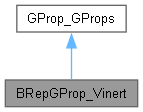
 Public Member Functions inherited from GProp_GProps
 1.10.0