 |
Open CASCADE Technology Reference Manual 8.0.0
|
Loading...
Searching...
No Matches
|
Open CASCADE Technology Reference Manual 8.0.0
|
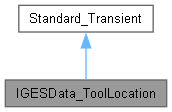
This Tool determines and gives access to effective Locations of IGES Entities as defined by the IGES Norm. These Locations can be for each Entity : More...
#include <IGESData_ToolLocation.hxx>
Public Member Functions | |
| IGESData_ToolLocation (const occ::handle< IGESData_IGESModel > &amodel, const occ::handle< IGESData_Protocol > &protocol) | |
| Creates a ToolLocation on a given Model, filled with the help of a Protocol (which allows to known Entities referenced by other ones) | |
| void | Load () |
| Does the effective work of determining Locations of Entities. | |
| void | SetPrecision (const double prec) |
| Sets a precision for the Analysis of Locations (default by constructor is 1.E-05) | |
| void | SetReference (const occ::handle< IGESData_IGESEntity > &parent, const occ::handle< IGESData_IGESEntity > &child) |
| Sets the "Reference" information for <child> as being <parent> Sets an Error Status if already set (see method IsAmbiguous) | |
| void | SetParentAssoc (const occ::handle< IGESData_IGESEntity > &parent, const occ::handle< IGESData_IGESEntity > &child) |
| Sets the "Associativity" information for <child> as being <parent> (it must be the Parent itself, not the Associativity) | |
| void | ResetDependences (const occ::handle< IGESData_IGESEntity > &child) |
| Resets all information about dependences for <child> | |
| void | SetOwnAsDependent (const occ::handle< IGESData_IGESEntity > &ent) |
| Unitary action which defines Entities referenced by <ent> (except those in Directory Part and Associativities List) as Dependent (their Locations are related to that of <ent>) | |
| bool | IsTransf (const occ::handle< IGESData_IGESEntity > &ent) const |
| Returns True if <ent> is kind of TransfEntity. Then, it has no location, while it can be used to define a Location) | |
| bool | IsAssociativity (const occ::handle< IGESData_IGESEntity > &ent) const |
| Returns True if <ent> is an Associativity (IGES Type 402). Then, Location does not apply. | |
| bool | HasTransf (const occ::handle< IGESData_IGESEntity > &ent) const |
| Returns True if <ent> has a Transformation Matrix in proper (referenced from its Directory Part) | |
| gp_GTrsf | ExplicitLocation (const occ::handle< IGESData_IGESEntity > &ent) const |
| Returns the Explicit Location defined by the Transformation Matrix of <ent>. Identity if there is none. | |
| bool | IsAmbiguous (const occ::handle< IGESData_IGESEntity > &ent) const |
| Returns True if more than one Parent has been determined for <ent>, by adding direct References and Associativities. | |
| bool | HasParent (const occ::handle< IGESData_IGESEntity > &ent) const |
| Returns True if <ent> is dependent from one and only one other Entity, either by Reference or by Associativity. | |
| occ::handle< IGESData_IGESEntity > | Parent (const occ::handle< IGESData_IGESEntity > &ent) const |
| Returns the unique Parent recorded for <ent>. Returns a Null Handle if there is none. | |
| bool | HasParentByAssociativity (const occ::handle< IGESData_IGESEntity > &ent) const |
| Returns True if the Parent, if there is one, is defined by a SingleParentEntity Associativity Else, if HasParent is True, it is by Reference. | |
| gp_GTrsf | ParentLocation (const occ::handle< IGESData_IGESEntity > &ent) const |
| Returns the effective Location of the Parent of <ent>, if there is one : this Location is itself given as compound according dependences on the Parent, if there are some. Returns an Identity Transformation if no Parent is recorded. | |
| gp_GTrsf | EffectiveLocation (const occ::handle< IGESData_IGESEntity > &ent) const |
| Returns the effective Location of an Entity, i.e. the composition of its proper Transformation Matrix (returned by Transf) and its Parent's Location (returned by ParentLocation) | |
| bool | AnalyseLocation (const gp_GTrsf &loc, gp_Trsf &result) const |
| Analysis a Location given as a GTrsf, by trying to convert it to a Trsf (i.e. to a True Location of which effect is described by an Isometry or a Similarity) Works with the Precision given by default or by SetPrecision Calls ConvertLocation (see below) | |
 Public Member Functions inherited from Standard_Transient Public Member Functions inherited from Standard_Transient | |
| Standard_Transient () | |
| Empty constructor. | |
| Standard_Transient (const Standard_Transient &) | |
| Copy constructor – does nothing. | |
| Standard_Transient & | operator= (const Standard_Transient &) |
| Assignment operator, needed to avoid copying reference counter. | |
| virtual | ~Standard_Transient ()=default |
| Destructor must be virtual. | |
| virtual const opencascade::handle< Standard_Type > & | DynamicType () const |
| Returns a type descriptor about this object. | |
| bool | IsInstance (const opencascade::handle< Standard_Type > &theType) const |
| Returns a true value if this is an instance of Type. | |
| bool | IsInstance (const char *const theTypeName) const |
| Returns a true value if this is an instance of TypeName. | |
| bool | IsKind (const opencascade::handle< Standard_Type > &theType) const |
| Returns true if this is an instance of Type or an instance of any class that inherits from Type. Note that multiple inheritance is not supported by OCCT RTTI mechanism. | |
| bool | IsKind (const char *const theTypeName) const |
| Returns true if this is an instance of TypeName or an instance of any class that inherits from TypeName. Note that multiple inheritance is not supported by OCCT RTTI mechanism. | |
| Standard_Transient * | This () const |
| Returns non-const pointer to this object (like const_cast). For protection against creating handle to objects allocated in stack or call from constructor, it will raise exception Standard_ProgramError if reference counter is zero. | |
| int | GetRefCount () const noexcept |
| Get the reference counter of this object. | |
| void | IncrementRefCounter () noexcept |
| Increments the reference counter of this object. Uses relaxed memory ordering since incrementing only requires atomicity, not synchronization with other memory operations. | |
| int | DecrementRefCounter () noexcept |
| Decrements the reference counter of this object; returns the decremented value. Uses release ordering for the decrement to ensure all writes to the object are visible before the count reaches zero. An acquire fence is added only when the count reaches zero, ensuring proper synchronization before deletion. This is more efficient than using acq_rel for every decrement. | |
| virtual void | Delete () const |
| Memory deallocator for transient classes. | |
Static Public Member Functions | |
| static bool | ConvertLocation (const double prec, const gp_GTrsf &loc, gp_Trsf &result, const double uni=1) |
| Conversion of a Location, from GTrsf form to Trsf form Works with a precision given as argument. Returns True if the Conversion is possible, (hence, <result> contains the converted location), False else <unit>, if given, indicates the unit in which <loc> is defined in meters. It concerns the translation part (to be converted. | |
| Static Public Member Functions inherited from Standard_Transient | |
| static constexpr const char * | get_type_name () |
| Returns a type descriptor about this object. | |
| static const opencascade::handle< Standard_Type > & | get_type_descriptor () |
| Returns type descriptor of Standard_Transient class. | |
Additional Inherited Members | |
| Public Types inherited from Standard_Transient | |
| typedef void | base_type |
| Returns a type descriptor about this object. | |
This Tool determines and gives access to effective Locations of IGES Entities as defined by the IGES Norm. These Locations can be for each Entity :
Implicit definition can be itself defined, either through the definition of an Entity (i.e. a Composite Curve references a list of Curves), or by a specific Associativity, of type SingleParentEntity, by which the Location of the Parent is applied to the Childs defined by this Associativity. Remark that a Transf itself has no Location, but it can be compound
This is a TShared object, then it is easier to use in an interactive session
| IGESData_ToolLocation::IGESData_ToolLocation | ( | const occ::handle< IGESData_IGESModel > & | amodel, |
| const occ::handle< IGESData_Protocol > & | protocol ) |
Creates a ToolLocation on a given Model, filled with the help of a Protocol (which allows to known Entities referenced by other ones)
Analysis a Location given as a GTrsf, by trying to convert it to a Trsf (i.e. to a True Location of which effect is described by an Isometry or a Similarity) Works with the Precision given by default or by SetPrecision Calls ConvertLocation (see below)
|
static |
Conversion of a Location, from GTrsf form to Trsf form Works with a precision given as argument. Returns True if the Conversion is possible, (hence, <result> contains the converted location), False else <unit>, if given, indicates the unit in which <loc> is defined in meters. It concerns the translation part (to be converted.
As a class method, it can be called separately
| gp_GTrsf IGESData_ToolLocation::EffectiveLocation | ( | const occ::handle< IGESData_IGESEntity > & | ent | ) | const |
Returns the effective Location of an Entity, i.e. the composition of its proper Transformation Matrix (returned by Transf) and its Parent's Location (returned by ParentLocation)
| gp_GTrsf IGESData_ToolLocation::ExplicitLocation | ( | const occ::handle< IGESData_IGESEntity > & | ent | ) | const |
Returns the Explicit Location defined by the Transformation Matrix of <ent>. Identity if there is none.
| bool IGESData_ToolLocation::HasParent | ( | const occ::handle< IGESData_IGESEntity > & | ent | ) | const |
Returns True if <ent> is dependent from one and only one other Entity, either by Reference or by Associativity.
| bool IGESData_ToolLocation::HasParentByAssociativity | ( | const occ::handle< IGESData_IGESEntity > & | ent | ) | const |
Returns True if the Parent, if there is one, is defined by a SingleParentEntity Associativity Else, if HasParent is True, it is by Reference.
| bool IGESData_ToolLocation::HasTransf | ( | const occ::handle< IGESData_IGESEntity > & | ent | ) | const |
Returns True if <ent> has a Transformation Matrix in proper (referenced from its Directory Part)
| bool IGESData_ToolLocation::IsAmbiguous | ( | const occ::handle< IGESData_IGESEntity > & | ent | ) | const |
Returns True if more than one Parent has been determined for <ent>, by adding direct References and Associativities.
| bool IGESData_ToolLocation::IsAssociativity | ( | const occ::handle< IGESData_IGESEntity > & | ent | ) | const |
Returns True if <ent> is an Associativity (IGES Type 402). Then, Location does not apply.
| bool IGESData_ToolLocation::IsTransf | ( | const occ::handle< IGESData_IGESEntity > & | ent | ) | const |
Returns True if <ent> is kind of TransfEntity. Then, it has no location, while it can be used to define a Location)
| void IGESData_ToolLocation::Load | ( | ) |
Does the effective work of determining Locations of Entities.
| occ::handle< IGESData_IGESEntity > IGESData_ToolLocation::Parent | ( | const occ::handle< IGESData_IGESEntity > & | ent | ) | const |
Returns the unique Parent recorded for <ent>. Returns a Null Handle if there is none.
| gp_GTrsf IGESData_ToolLocation::ParentLocation | ( | const occ::handle< IGESData_IGESEntity > & | ent | ) | const |
Returns the effective Location of the Parent of <ent>, if there is one : this Location is itself given as compound according dependences on the Parent, if there are some. Returns an Identity Transformation if no Parent is recorded.
| void IGESData_ToolLocation::ResetDependences | ( | const occ::handle< IGESData_IGESEntity > & | child | ) |
Resets all information about dependences for <child>
| void IGESData_ToolLocation::SetOwnAsDependent | ( | const occ::handle< IGESData_IGESEntity > & | ent | ) |
Unitary action which defines Entities referenced by <ent> (except those in Directory Part and Associativities List) as Dependent (their Locations are related to that of <ent>)
| void IGESData_ToolLocation::SetParentAssoc | ( | const occ::handle< IGESData_IGESEntity > & | parent, |
| const occ::handle< IGESData_IGESEntity > & | child ) |
Sets the "Associativity" information for <child> as being <parent> (it must be the Parent itself, not the Associativity)
Sets a precision for the Analysis of Locations (default by constructor is 1.E-05)
| void IGESData_ToolLocation::SetReference | ( | const occ::handle< IGESData_IGESEntity > & | parent, |
| const occ::handle< IGESData_IGESEntity > & | child ) |
Sets the "Reference" information for <child> as being <parent> Sets an Error Status if already set (see method IsAmbiguous)
 1.10.0