 |
Open CASCADE Technology Reference Manual 8.0.0
|
Loading...
Searching...
No Matches
|
Open CASCADE Technology Reference Manual 8.0.0
|
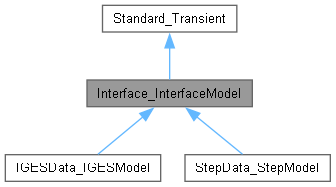
Defines an (Indexed) Set of data corresponding to a complete Transfer by a File Interface, i.e. File Header and Transient Entities (Objects) contained in a File. Contained Entities are identified in the Model by unique and consecutive Numbers. More...
#include <Interface_InterfaceModel.hxx>
Public Member Functions | |
| void | Destroy () |
| Clears the list of entities (service WhenDelete) | |
| ~Interface_InterfaceModel () override | |
| void | SetProtocol (const occ::handle< Interface_Protocol > &proto) |
| Sets a Protocol for this Model It is also set by a call to AddWithRefs with Protocol It is used for : DumpHeader (as required), ClearEntities ... | |
| virtual occ::handle< Interface_Protocol > | Protocol () const |
| Returns the Protocol which has been set by SetProtocol, or AddWithRefs with Protocol. | |
| void | SetGTool (const occ::handle< Interface_GTool > >ool) |
| Sets a GTool for this model, which already defines a Protocol. | |
| occ::handle< Interface_GTool > | GTool () const |
| Returns the GTool, set by SetProtocol or by SetGTool. | |
| bool & | DispatchStatus () |
| Returns the Dispatch Status, either for get or set A Model which is produced from Dispatch may share entities with the original (according to the Protocol), hence these non-copied entities should not be deleted. | |
| virtual void | Clear () |
| Erases contained data; used when a Model is copied to others : the new copied ones begin from clear Clear calls specific method ClearHeader (see below) | |
| virtual void | ClearEntities () |
| Clears the entities; uses the general service WhenDelete, in addition to the standard Memory Manager; can be redefined. | |
| virtual void | ClearLabels ()=0 |
| Erases information about labels, if any : specific to each norm. | |
| virtual void | ClearHeader ()=0 |
| Clears Model's header : specific to each norm. | |
| int | NbEntities () const |
| Returns count of contained Entities. | |
| bool | Contains (const occ::handle< Standard_Transient > &anentity) const |
| Returns True if a Model contains an Entity (for a ReportEntity, looks for the ReportEntity itself AND its Concerned Entity) | |
| int | Number (const occ::handle< Standard_Transient > &anentity) const |
| Returns the Number of an Entity in the Model if it contains it. Else returns 0. For a ReportEntity, looks at Concerned Entity. Returns the Directory entry Number of an Entity in the Model if it contains it. Else returns 0. For a ReportEntity, looks at Concerned Entity. | |
| const occ::handle< Standard_Transient > & | Value (const int num) const |
| Returns an Entity identified by its number in the Model Each sub-class of InterfaceModel can define its own method Entity to return its specific class of Entity (e.g. for VDA, VDAModel returns a VDAEntity), working by calling Value Remark : For a Reported Entity, (Erroneous, Corrected, Unknown), this method returns this Reported Entity. See ReportEntity for other questions. | |
| int | NbTypes (const occ::handle< Standard_Transient > &ent) const |
| Returns the count of DISTINCT types under which an entity may be processed. Defined by the Protocol, which gives default as 1 (dynamic Type). | |
| occ::handle< Standard_Type > | Type (const occ::handle< Standard_Transient > &ent, const int num=1) const |
| Returns a type, given its rank : defined by the Protocol (by default, the first one) | |
| const char * | TypeName (const occ::handle< Standard_Transient > &ent, const bool complete=true) const |
| Returns the type name of an entity, from the list of types (one or more ...) <complete> True (D) gives the complete type, else packages are removed WARNING : buffered, to be immediately copied or printed. | |
| Interface_DataState | EntityState (const int num) const |
| Returns the State of an entity, given its number. | |
| bool | IsReportEntity (const int num, const bool semantic=false) const |
| Returns True if <num> identifies a ReportEntity in the Model Hence, ReportEntity can be called. | |
| occ::handle< Interface_ReportEntity > | ReportEntity (const int num, const bool semantic=false) const |
| Returns a ReportEntity identified by its number in the Model, or a Null Handle If <num> does not identify a ReportEntity. | |
| bool | IsErrorEntity (const int num) const |
| Returns True if <num> identifies an Error Entity : in this case, a ReportEntity brings Fail Messages and possibly an "undefined" Content, see IsRedefinedEntity. | |
| bool | IsRedefinedContent (const int num) const |
| Returns True if <num> identifies an Entity which content is redefined through a ReportEntity (i.e. with literal data only) This happens when an entity is syntactically erroneous in the way that its basic content remains empty. For more details (such as content itself), see ReportEntity. | |
| bool | ClearReportEntity (const int num) |
| Removes the ReportEntity attached to Entity <num>. Returns True if done, False if no ReportEntity was attached to <num>. Warning : the caller must assume that this clearing is meaningful. | |
| bool | SetReportEntity (const int num, const occ::handle< Interface_ReportEntity > &rep) |
| Sets or Replaces a ReportEntity for the Entity <num>. Returns True if Report is replaced, False if it has been replaced Warning : the caller must assume that this setting is meaningful. | |
| bool | AddReportEntity (const occ::handle< Interface_ReportEntity > &rep, const bool semantic=false) |
| Adds a ReportEntity as such. Returns False if the concerned entity is not recorded in the Model Else, adds it into, either the main report list or the list for semantic checks, then returns True. | |
| bool | IsUnknownEntity (const int num) const |
| Returns True if <num> identifies an Unknown Entity : in this case, a ReportEntity with no Check Messages designates it. | |
| void | FillSemanticChecks (const Interface_CheckIterator &checks, const bool clear=true) |
| Fills the list of semantic checks. This list is computed (by CheckTool). Hence, it can be stored in the model for later queries <clear> True (D) : new list replaces <clear> False : new list is cumulated. | |
| bool | HasSemanticChecks () const |
| Returns True if semantic checks have been filled. | |
| const occ::handle< Interface_Check > & | Check (const int num, const bool syntactic) const |
| Returns the check attached to an entity, designated by its Number. 0 for global check <semantic> True : recorded semantic check <semantic> False : recorded syntactic check (see ReportEntity) If no check is recorded for <num>, returns an empty Check. | |
| virtual void | Reservate (const int nbent) |
| Does a reservation for the List of Entities (for optimized storage management). If it is not called, storage management can be less efficient. <nbent> is the expected count of Entities to store. | |
| virtual void | AddEntity (const occ::handle< Standard_Transient > &anentity) |
| Internal method for adding an Entity. Used by file reading (defined by each Interface) and Transfer tools. It adds the entity required to be added, not its refs : see AddWithRefs. If <anentity> is a ReportEntity, it is added to the list of Reports, its Concerned Entity (Erroneous or Corrected, else Unknown) is added to the list of Entities. That is, the ReportEntity must be created before Adding. | |
| void | AddWithRefs (const occ::handle< Standard_Transient > &anent, const occ::handle< Interface_Protocol > &proto, const int level=0, const bool listall=false) |
| Adds to the Model, an Entity with all its References, as they are defined by General Services FillShared and ListImplied. Process is recursive (any sub-levels) if <level> = 0 (Default) Else, adds sub-entities until the required sub-level. Especially, if <level> = 1, adds immediate subs and that's all. | |
| void | AddWithRefs (const occ::handle< Standard_Transient > &anent, const int level=0, const bool listall=false) |
| Same as above, but works with the Protocol of the Model. | |
| void | AddWithRefs (const occ::handle< Standard_Transient > &anent, const Interface_GeneralLib &lib, const int level=0, const bool listall=false) |
| Same as above, but works with an already created GeneralLib. | |
| void | ReplaceEntity (const int nument, const occ::handle< Standard_Transient > &anent) |
| Replace Entity with Number=nument on other entity - "anent". | |
| void | ReverseOrders (const int after=0) |
| Reverses the Numbers of the Entities, between <after> and the total count of Entities. Thus, the entities : 1,2 ... after, after+1 ... nb-1, nb become numbered as : 1,2 ... after, nb, nb-1 ... after+1 By default (after = 0) the whole list of Entities is reversed. | |
| void | ChangeOrder (const int oldnum, const int newnum, const int count=1) |
| Changes the Numbers of some Entities : <oldnum> is moved to <newnum>, same for <count> entities. Thus : 1,2 ... newnum-1 newnum ... oldnum .. oldnum+count oldnum+count+1 .. gives 1,2 ... newnum-1 oldnum .. oldnum+count newnum ... oldnum+count+1 (can be seen as a circular permutation) | |
| void | GetFromTransfer (const Interface_EntityIterator &aniter) |
| Gets contents from an EntityIterator, prepared by a Transfer tool (e.g TransferCopy). Starts from clear. | |
| virtual void | GetFromAnother (const occ::handle< Interface_InterfaceModel > &other)=0 |
| Gets header (data specific of a defined Interface) from another InterfaceModel; called from TransferCopy. | |
| virtual occ::handle< Interface_InterfaceModel > | NewEmptyModel () const =0 |
| Returns a New Empty Model, same type as <me> (whatever its Type); called to Copy parts a Model into other ones, then followed by a call to GetFromAnother (Header) then filling with specified Entities, themselves copied. | |
| bool | SetCategoryNumber (const int num, const int val) |
| Records a category number for an entity number Returns True when done, False if <num> is out of range. | |
| int | CategoryNumber (const int num) const |
| Returns the recorded category number for a given entity number 0 if none was defined for this entity. | |
| void | FillIterator (Interface_EntityIterator &iter) const |
| Allows an EntityIterator to get a list of Entities. | |
| Interface_EntityIterator | Entities () const |
| Returns the list of all Entities, as an Iterator on Entities (the Entities themselves, not the Reports) | |
| Interface_EntityIterator | Reports (const bool semantic=false) const |
| Returns the list of all ReportEntities, i.e. data about Entities read with Error or Warning information (each item has to be casted to Report Entity then it can be queried for Concerned Entity, Content, Check ...) By default, returns the main reports, is <semantic> is True it returns the list for semantic checks. | |
| Interface_EntityIterator | Redefineds () const |
| Returns the list of ReportEntities which redefine data (generally, if concerned entity is "Error", a literal content is added to it : this is a "redefined entity". | |
| const occ::handle< Interface_Check > & | GlobalCheck (const bool syntactic=true) const |
| Returns the GlobalCheck, which memorizes messages global to the file (not specific to an Entity), especially Header. | |
| void | SetGlobalCheck (const occ::handle< Interface_Check > &ach) |
| Allows to modify GlobalCheck, after getting then completing it Remark : it is SYNTACTIC check. Semantics, see FillChecks. | |
| virtual void | VerifyCheck (occ::handle< Interface_Check > &ach) const |
| Minimum Semantic Global Check on data in model (header) Can only check basic Data. See also GlobalCheck from Protocol for a check which takes the Graph into account Default does nothing, can be redefined. | |
| virtual void | DumpHeader (Standard_OStream &S, const int level=0) const =0 |
| Dumps Header in a short, easy to read, form, onto a Stream <level> allows to print more or less parts of the header, if necessary. 0 for basic print. | |
| void | Print (const occ::handle< Standard_Transient > &ent, Standard_OStream &s, const int mode=0) const |
| Prints identification of a given entity in <me>, in order to be printed in a list or phrase <mode> < 0 : prints only its number <mode> = 1 : just calls PrintLabel <mode> = 0 (D) : prints its number plus '/' plus PrintLabel If <ent> == <me>, simply prints "Global" If <ent> is unknown, prints "??/its type". | |
| virtual void | PrintLabel (const occ::handle< Standard_Transient > &ent, Standard_OStream &S) const =0 |
| Prints label specific to each norm, for a given entity. Must only print label itself, in order to be included in a phrase. Can call the result of StringLabel, but not obliged. | |
| virtual void | PrintToLog (const occ::handle< Standard_Transient > &ent, Standard_OStream &S) const |
| Prints label specific to each norm in log format, for a given entity. By default, just calls PrintLabel, can be redefined. | |
| virtual occ::handle< TCollection_HAsciiString > | StringLabel (const occ::handle< Standard_Transient > &ent) const =0 |
| Returns a string with the label attached to a given entity. Warning : While this string may be edited on the spot, if it is a read field, the returned value must be copied before. | |
| virtual int | NextNumberForLabel (const char *const label, const int lastnum=0, const bool exact=true) const |
| Searches a label which matches with one entity. Begins from <lastnum>+1 (default:1) and scans the entities until <NbEntities>. For the first which matches <label>, this method returns its Number. Returns 0 if nothing found Can be called recursively (labels are not specified as unique) <exact> : if True (default), exact match is required else, checks the END of entity label. | |
 Public Member Functions inherited from Standard_Transient Public Member Functions inherited from Standard_Transient | |
| Standard_Transient () | |
| Empty constructor. | |
| Standard_Transient (const Standard_Transient &) | |
| Copy constructor – does nothing. | |
| Standard_Transient & | operator= (const Standard_Transient &) |
| Assignment operator, needed to avoid copying reference counter. | |
| virtual | ~Standard_Transient ()=default |
| Destructor must be virtual. | |
| virtual const opencascade::handle< Standard_Type > & | DynamicType () const |
| Returns a type descriptor about this object. | |
| bool | IsInstance (const opencascade::handle< Standard_Type > &theType) const |
| Returns a true value if this is an instance of Type. | |
| bool | IsInstance (const char *const theTypeName) const |
| Returns a true value if this is an instance of TypeName. | |
| bool | IsKind (const opencascade::handle< Standard_Type > &theType) const |
| Returns true if this is an instance of Type or an instance of any class that inherits from Type. Note that multiple inheritance is not supported by OCCT RTTI mechanism. | |
| bool | IsKind (const char *const theTypeName) const |
| Returns true if this is an instance of TypeName or an instance of any class that inherits from TypeName. Note that multiple inheritance is not supported by OCCT RTTI mechanism. | |
| Standard_Transient * | This () const |
| Returns non-const pointer to this object (like const_cast). For protection against creating handle to objects allocated in stack or call from constructor, it will raise exception Standard_ProgramError if reference counter is zero. | |
| int | GetRefCount () const noexcept |
| Get the reference counter of this object. | |
| void | IncrementRefCounter () noexcept |
| Increments the reference counter of this object. Uses relaxed memory ordering since incrementing only requires atomicity, not synchronization with other memory operations. | |
| int | DecrementRefCounter () noexcept |
| Decrements the reference counter of this object; returns the decremented value. Uses release ordering for the decrement to ensure all writes to the object are visible before the count reaches zero. An acquire fence is added only when the count reaches zero, ensuring proper synchronization before deletion. This is more efficient than using acq_rel for every decrement. | |
| virtual void | Delete () const |
| Memory deallocator for transient classes. | |
Static Public Member Functions | |
| static const char * | ClassName (const char *const typnam) |
| From a CDL Type Name, returns the Class part (package dropped) WARNING : buffered, to be immediately copied or printed. | |
| static bool | HasTemplate (const char *const name) |
| Returns true if a template is attached to a given name. | |
| static occ::handle< Interface_InterfaceModel > | Template (const char *const name) |
| Returns the template model attached to a name, or a Null Handle. | |
| static bool | SetTemplate (const char *const name, const occ::handle< Interface_InterfaceModel > &model) |
| Records a new template model with a name. If the name was already recorded, the corresponding template is replaced by the new one. Then, WARNING : test HasTemplate to avoid surprises. | |
| static occ::handle< NCollection_HSequence< occ::handle< TCollection_HAsciiString > > > | ListTemplates () |
| Returns the complete list of names attached to template models. | |
| Static Public Member Functions inherited from Standard_Transient | |
| static constexpr const char * | get_type_name () |
| Returns a type descriptor about this object. | |
| static const opencascade::handle< Standard_Type > & | get_type_descriptor () |
| Returns type descriptor of Standard_Transient class. | |
Protected Member Functions | |
| Interface_InterfaceModel () | |
| Defines empty InterfaceModel, ready to be filled. | |
Additional Inherited Members | |
| Public Types inherited from Standard_Transient | |
| typedef void | base_type |
| Returns a type descriptor about this object. | |
Defines an (Indexed) Set of data corresponding to a complete Transfer by a File Interface, i.e. File Header and Transient Entities (Objects) contained in a File. Contained Entities are identified in the Model by unique and consecutive Numbers.
In addition, a Model can attach to each entity, a specific Label according to the norm (e.g. Name for VDA, #ident for Step ...), intended to be output on a string or a stream (remark : labels are not obliged to be unique)
InterfaceModel itself is not Transient, it is intended to work on a set of Transient Data. The services offered are basic Listing and Identification operations on Transient Entities, storage of Error Reports, Copying.
Moreovere, it is possible to define and use templates. These are empty Models, from which copies can be obtained in order to be filled with effective data. This allows to record standard definitions for headers, avoiding to recreate them for each sendings, and assuring customisation of produced files for a given site. A template is attached to a name. It is possible to define a template from another one (get it, edit it then record it under another name).
See also Graph, ShareTool, CheckTool for more
|
inlineoverride |
|
protected |
Defines empty InterfaceModel, ready to be filled.
|
virtual |
Internal method for adding an Entity. Used by file reading (defined by each Interface) and Transfer tools. It adds the entity required to be added, not its refs : see AddWithRefs. If <anentity> is a ReportEntity, it is added to the list of Reports, its Concerned Entity (Erroneous or Corrected, else Unknown) is added to the list of Entities. That is, the ReportEntity must be created before Adding.
| bool Interface_InterfaceModel::AddReportEntity | ( | const occ::handle< Interface_ReportEntity > & | rep, |
| const bool | semantic = false ) |
Adds a ReportEntity as such. Returns False if the concerned entity is not recorded in the Model Else, adds it into, either the main report list or the list for semantic checks, then returns True.
| void Interface_InterfaceModel::AddWithRefs | ( | const occ::handle< Standard_Transient > & | anent, |
| const int | level = 0, | ||
| const bool | listall = false ) |
Same as above, but works with the Protocol of the Model.
| void Interface_InterfaceModel::AddWithRefs | ( | const occ::handle< Standard_Transient > & | anent, |
| const Interface_GeneralLib & | lib, | ||
| const int | level = 0, | ||
| const bool | listall = false ) |
Same as above, but works with an already created GeneralLib.
| void Interface_InterfaceModel::AddWithRefs | ( | const occ::handle< Standard_Transient > & | anent, |
| const occ::handle< Interface_Protocol > & | proto, | ||
| const int | level = 0, | ||
| const bool | listall = false ) |
Adds to the Model, an Entity with all its References, as they are defined by General Services FillShared and ListImplied. Process is recursive (any sub-levels) if <level> = 0 (Default) Else, adds sub-entities until the required sub-level. Especially, if <level> = 1, adds immediate subs and that's all.
If <listall> is False (Default), an entity (<anentity> itself or one of its subs at any level) which is already recorded in the Model is not analysed, only the newly added ones are. If <listall> is True, all items are analysed (this allows to ensure the consistency of an adding made by steps)
Returns the recorded category number for a given entity number 0 if none was defined for this entity.
| void Interface_InterfaceModel::ChangeOrder | ( | const int | oldnum, |
| const int | newnum, | ||
| const int | count = 1 ) |
Changes the Numbers of some Entities : <oldnum> is moved to <newnum>, same for <count> entities. Thus : 1,2 ... newnum-1 newnum ... oldnum .. oldnum+count oldnum+count+1 .. gives 1,2 ... newnum-1 oldnum .. oldnum+count newnum ... oldnum+count+1 (can be seen as a circular permutation)
| const occ::handle< Interface_Check > & Interface_InterfaceModel::Check | ( | const int | num, |
| const bool | syntactic ) const |
Returns the check attached to an entity, designated by its Number. 0 for global check <semantic> True : recorded semantic check <semantic> False : recorded syntactic check (see ReportEntity) If no check is recorded for <num>, returns an empty Check.
From a CDL Type Name, returns the Class part (package dropped) WARNING : buffered, to be immediately copied or printed.
Erases contained data; used when a Model is copied to others : the new copied ones begin from clear Clear calls specific method ClearHeader (see below)
Clears the entities; uses the general service WhenDelete, in addition to the standard Memory Manager; can be redefined.
Clears Model's header : specific to each norm.
Implemented in IGESData_IGESModel, and StepData_StepModel.
Erases information about labels, if any : specific to each norm.
Implemented in IGESData_IGESModel, and StepData_StepModel.
Removes the ReportEntity attached to Entity <num>. Returns True if done, False if no ReportEntity was attached to <num>. Warning : the caller must assume that this clearing is meaningful.
| bool Interface_InterfaceModel::Contains | ( | const occ::handle< Standard_Transient > & | anentity | ) | const |
Returns True if a Model contains an Entity (for a ReportEntity, looks for the ReportEntity itself AND its Concerned Entity)
| void Interface_InterfaceModel::Destroy | ( | ) |
Clears the list of entities (service WhenDelete)
| bool & Interface_InterfaceModel::DispatchStatus | ( | ) |
Returns the Dispatch Status, either for get or set A Model which is produced from Dispatch may share entities with the original (according to the Protocol), hence these non-copied entities should not be deleted.
|
pure virtual |
Dumps Header in a short, easy to read, form, onto a Stream <level> allows to print more or less parts of the header, if necessary. 0 for basic print.
Implemented in IGESData_IGESModel, and StepData_StepModel.
| Interface_EntityIterator Interface_InterfaceModel::Entities | ( | ) | const |
Returns the list of all Entities, as an Iterator on Entities (the Entities themselves, not the Reports)
| Interface_DataState Interface_InterfaceModel::EntityState | ( | const int | num | ) | const |
Returns the State of an entity, given its number.
| void Interface_InterfaceModel::FillIterator | ( | Interface_EntityIterator & | iter | ) | const |
Allows an EntityIterator to get a list of Entities.
| void Interface_InterfaceModel::FillSemanticChecks | ( | const Interface_CheckIterator & | checks, |
| const bool | clear = true ) |
Fills the list of semantic checks. This list is computed (by CheckTool). Hence, it can be stored in the model for later queries <clear> True (D) : new list replaces <clear> False : new list is cumulated.
|
pure virtual |
Gets header (data specific of a defined Interface) from another InterfaceModel; called from TransferCopy.
Implemented in IGESData_IGESModel, and StepData_StepModel.
| void Interface_InterfaceModel::GetFromTransfer | ( | const Interface_EntityIterator & | aniter | ) |
Gets contents from an EntityIterator, prepared by a Transfer tool (e.g TransferCopy). Starts from clear.
| const occ::handle< Interface_Check > & Interface_InterfaceModel::GlobalCheck | ( | const bool | syntactic = true | ) | const |
Returns the GlobalCheck, which memorizes messages global to the file (not specific to an Entity), especially Header.
| occ::handle< Interface_GTool > Interface_InterfaceModel::GTool | ( | ) | const |
Returns the GTool, set by SetProtocol or by SetGTool.
| bool Interface_InterfaceModel::HasSemanticChecks | ( | ) | const |
Returns True if semantic checks have been filled.
Returns true if a template is attached to a given name.
Returns True if <num> identifies an Error Entity : in this case, a ReportEntity brings Fail Messages and possibly an "undefined" Content, see IsRedefinedEntity.
Returns True if <num> identifies an Entity which content is redefined through a ReportEntity (i.e. with literal data only) This happens when an entity is syntactically erroneous in the way that its basic content remains empty. For more details (such as content itself), see ReportEntity.
Returns True if <num> identifies a ReportEntity in the Model Hence, ReportEntity can be called.
By default, queries main report, if <semantic> is True, it queries report for semantic check
Remember that a Report Entity can be defined for an Unknown Entity, or a Corrected or Erroneous (at read time) Entity. The ReportEntity is defined before call to method AddEntity.
Returns True if <num> identifies an Unknown Entity : in this case, a ReportEntity with no Check Messages designates it.
|
static |
Returns the complete list of names attached to template models.
| int Interface_InterfaceModel::NbEntities | ( | ) | const |
Returns count of contained Entities.
| int Interface_InterfaceModel::NbTypes | ( | const occ::handle< Standard_Transient > & | ent | ) | const |
Returns the count of DISTINCT types under which an entity may be processed. Defined by the Protocol, which gives default as 1 (dynamic Type).
|
pure virtual |
Returns a New Empty Model, same type as <me> (whatever its Type); called to Copy parts a Model into other ones, then followed by a call to GetFromAnother (Header) then filling with specified Entities, themselves copied.
Implemented in IGESData_IGESModel, and StepData_StepModel.
|
virtual |
Searches a label which matches with one entity. Begins from <lastnum>+1 (default:1) and scans the entities until <NbEntities>. For the first which matches <label>, this method returns its Number. Returns 0 if nothing found Can be called recursively (labels are not specified as unique) <exact> : if True (default), exact match is required else, checks the END of entity label.
This method is virtual, hence it can be redefined for a more efficient search (if exact is true).
| int Interface_InterfaceModel::Number | ( | const occ::handle< Standard_Transient > & | anentity | ) | const |
Returns the Number of an Entity in the Model if it contains it. Else returns 0. For a ReportEntity, looks at Concerned Entity. Returns the Directory entry Number of an Entity in the Model if it contains it. Else returns 0. For a ReportEntity, looks at Concerned Entity.
| void Interface_InterfaceModel::Print | ( | const occ::handle< Standard_Transient > & | ent, |
| Standard_OStream & | s, | ||
| const int | mode = 0 ) const |
Prints identification of a given entity in <me>, in order to be printed in a list or phrase <mode> < 0 : prints only its number <mode> = 1 : just calls PrintLabel <mode> = 0 (D) : prints its number plus '/' plus PrintLabel If <ent> == <me>, simply prints "Global" If <ent> is unknown, prints "??/its type".
|
pure virtual |
Prints label specific to each norm, for a given entity. Must only print label itself, in order to be included in a phrase. Can call the result of StringLabel, but not obliged.
Implemented in IGESData_IGESModel, and StepData_StepModel.
|
virtual |
Prints label specific to each norm in log format, for a given entity. By default, just calls PrintLabel, can be redefined.
Reimplemented in IGESData_IGESModel.
|
virtual |
Returns the Protocol which has been set by SetProtocol, or AddWithRefs with Protocol.
| Interface_EntityIterator Interface_InterfaceModel::Redefineds | ( | ) | const |
Returns the list of ReportEntities which redefine data (generally, if concerned entity is "Error", a literal content is added to it : this is a "redefined entity".
| void Interface_InterfaceModel::ReplaceEntity | ( | const int | nument, |
| const occ::handle< Standard_Transient > & | anent ) |
Replace Entity with Number=nument on other entity - "anent".
| occ::handle< Interface_ReportEntity > Interface_InterfaceModel::ReportEntity | ( | const int | num, |
| const bool | semantic = false ) const |
Returns a ReportEntity identified by its number in the Model, or a Null Handle If <num> does not identify a ReportEntity.
By default, queries main report, if <semantic> is True, it queries report for semantic check
| Interface_EntityIterator Interface_InterfaceModel::Reports | ( | const bool | semantic = false | ) | const |
Returns the list of all ReportEntities, i.e. data about Entities read with Error or Warning information (each item has to be casted to Report Entity then it can be queried for Concerned Entity, Content, Check ...) By default, returns the main reports, is <semantic> is True it returns the list for semantic checks.
Does a reservation for the List of Entities (for optimized storage management). If it is not called, storage management can be less efficient. <nbent> is the expected count of Entities to store.
Reverses the Numbers of the Entities, between <after> and the total count of Entities. Thus, the entities : 1,2 ... after, after+1 ... nb-1, nb become numbered as : 1,2 ... after, nb, nb-1 ... after+1 By default (after = 0) the whole list of Entities is reversed.
Records a category number for an entity number Returns True when done, False if <num> is out of range.
| void Interface_InterfaceModel::SetGlobalCheck | ( | const occ::handle< Interface_Check > & | ach | ) |
Allows to modify GlobalCheck, after getting then completing it Remark : it is SYNTACTIC check. Semantics, see FillChecks.
| void Interface_InterfaceModel::SetGTool | ( | const occ::handle< Interface_GTool > & | gtool | ) |
Sets a GTool for this model, which already defines a Protocol.
| void Interface_InterfaceModel::SetProtocol | ( | const occ::handle< Interface_Protocol > & | proto | ) |
Sets a Protocol for this Model It is also set by a call to AddWithRefs with Protocol It is used for : DumpHeader (as required), ClearEntities ...
| bool Interface_InterfaceModel::SetReportEntity | ( | const int | num, |
| const occ::handle< Interface_ReportEntity > & | rep ) |
Sets or Replaces a ReportEntity for the Entity <num>. Returns True if Report is replaced, False if it has been replaced Warning : the caller must assume that this setting is meaningful.
|
static |
Records a new template model with a name. If the name was already recorded, the corresponding template is replaced by the new one. Then, WARNING : test HasTemplate to avoid surprises.
|
pure virtual |
Returns a string with the label attached to a given entity. Warning : While this string may be edited on the spot, if it is a read field, the returned value must be copied before.
Implemented in IGESData_IGESModel, and StepData_StepModel.
|
static |
Returns the template model attached to a name, or a Null Handle.
| occ::handle< Standard_Type > Interface_InterfaceModel::Type | ( | const occ::handle< Standard_Transient > & | ent, |
| const int | num = 1 ) const |
Returns a type, given its rank : defined by the Protocol (by default, the first one)
| const char * Interface_InterfaceModel::TypeName | ( | const occ::handle< Standard_Transient > & | ent, |
| const bool | complete = true ) const |
Returns the type name of an entity, from the list of types (one or more ...) <complete> True (D) gives the complete type, else packages are removed WARNING : buffered, to be immediately copied or printed.
| const occ::handle< Standard_Transient > & Interface_InterfaceModel::Value | ( | const int | num | ) | const |
Returns an Entity identified by its number in the Model Each sub-class of InterfaceModel can define its own method Entity to return its specific class of Entity (e.g. for VDA, VDAModel returns a VDAEntity), working by calling Value Remark : For a Reported Entity, (Erroneous, Corrected, Unknown), this method returns this Reported Entity. See ReportEntity for other questions.
|
virtual |
Minimum Semantic Global Check on data in model (header) Can only check basic Data. See also GlobalCheck from Protocol for a check which takes the Graph into account Default does nothing, can be redefined.
Reimplemented in IGESData_IGESModel, and StepData_StepModel.
 1.10.0