 |
Open CASCADE Technology Reference Manual 8.0.0
|
Loading...
Searching...
No Matches
|
Open CASCADE Technology Reference Manual 8.0.0
|
Working on heterogeneous platforms we need to use the system call gettimeofday. This function is portable and it measures ELAPSED time and CPU time in seconds and microseconds. Example: OSD_Timer aTimer; aTimer.Start(); // Start the timers (t1). ..... // Do something. aTimer.Stop(); // Stop the timers (t2). aTimer.Show(); // Give the elapsed time between t1 and t2. // Give also the process CPU time between // t1 and t2. More...
#include <OSD_Timer.hxx>
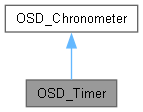
Public Member Functions | |
| OSD_Timer (bool theThisThreadOnly=false) | |
| Builds a Chronometer initialized and stopped. | |
| void | Reset (const double theTimeElapsedSec) |
| Stops and reinitializes the timer with specified elapsed time. | |
| void | Reset () override |
| Stops and reinitializes the timer with zero elapsed time. | |
| void | Restart () override |
| Restarts the Timer. | |
| void | Show () const override |
| Shows both the elapsed time and CPU time on the standard output stream <cout>.The chronometer can be running (Lap Time) or stopped. | |
| void | Show (Standard_OStream &os) const override |
| Shows both the elapsed time and CPU time on the output stream <OS>. | |
| void | Show (double &theSeconds, int &theMinutes, int &theHours, double &theCPUtime) const |
| returns both the elapsed time(seconds,minutes,hours) and CPU time. | |
| void | Stop () override |
| Stops the Timer. | |
| void | Start () override |
| Starts (after Create or Reset) or restarts (after Stop) the Timer. | |
| double | ElapsedTime () const |
| Returns elapsed time in seconds. | |
 Public Member Functions inherited from OSD_Chronometer Public Member Functions inherited from OSD_Chronometer | |
| OSD_Chronometer (bool theThisThreadOnly=false) | |
| Initializes a stopped Chronometer. | |
| virtual | ~OSD_Chronometer () |
| Destructor. | |
| bool | IsStarted () const |
| Return true if timer has been started. | |
| double | UserTimeCPU () const |
| Returns the current CPU user time in seconds. The chronometer can be running (laps Time) or stopped. | |
| double | SystemTimeCPU () const |
| Returns the current CPU system time in seconds. The chronometer can be running (laps Time) or stopped. | |
| bool | IsThisThreadOnly () const |
| Return TRUE if current thread CPU time should be measured, and FALSE to measure all threads CPU time; FALSE by default,. | |
| void | SetThisThreadOnly (bool theIsThreadOnly) |
| Set if current thread (TRUE) or all threads (FALSE) CPU time should be measured. Will raise exception if Timer is in started state. | |
| void | Show (double &theUserSeconds) const |
| Returns the current CPU user time in a variable. The chronometer can be running (laps Time) or stopped. | |
| void | Show (double &theUserSec, double &theSystemSec) const |
| Returns the current CPU user and system time in variables. The chronometer can be running (laps Time) or stopped. | |
Static Public Member Functions | |
| static double | GetWallClockTime () |
| Returns current time in seconds with system-defined precision. The could be a system uptime or a time from some date. Returned value is intended for precise elapsed time measurements as a delta between timestamps. On Windows implemented via QueryPerformanceCounter(), on other systems via gettimeofday(). | |
| Static Public Member Functions inherited from OSD_Chronometer | |
| static void | GetProcessCPU (double &UserSeconds, double &SystemSeconds) |
| Returns CPU time (user and system) consumed by the current process since its start, in seconds. The actual precision of the measurement depends on granularity provided by the system, and is platform-specific. | |
| static void | GetThreadCPU (double &UserSeconds, double &SystemSeconds) |
| Returns CPU time (user and system) consumed by the current thread since its start. Note that this measurement is platform-specific, as threads are implemented and managed differently on different platforms and CPUs. | |
Additional Inherited Members | |
| Protected Attributes inherited from OSD_Chronometer | |
| double | myStartCpuUser |
| double | myStartCpuSys |
| double | myCumulCpuUser |
| double | myCumulCpuSys |
| bool | myIsStopped |
| bool | myIsThreadOnly |
Working on heterogeneous platforms we need to use the system call gettimeofday. This function is portable and it measures ELAPSED time and CPU time in seconds and microseconds. Example: OSD_Timer aTimer; aTimer.Start(); // Start the timers (t1). ..... // Do something. aTimer.Stop(); // Stop the timers (t2). aTimer.Show(); // Give the elapsed time between t1 and t2. // Give also the process CPU time between // t1 and t2.
Builds a Chronometer initialized and stopped.
| theThisThreadOnly | when TRUE, measured CPU time will account time of the current thread only; otherwise CPU of the process (all threads, and completed children) is measured; this flag does NOT affect ElapsedTime() value, only values returned by OSD_Chronometer |
| double OSD_Timer::ElapsedTime | ( | ) | const |
Returns elapsed time in seconds.
Returns current time in seconds with system-defined precision. The could be a system uptime or a time from some date. Returned value is intended for precise elapsed time measurements as a delta between timestamps. On Windows implemented via QueryPerformanceCounter(), on other systems via gettimeofday().
|
overridevirtual |
Stops and reinitializes the timer with zero elapsed time.
Reimplemented from OSD_Chronometer.
Stops and reinitializes the timer with specified elapsed time.
|
overridevirtual |
Restarts the Timer.
Reimplemented from OSD_Chronometer.
|
overridevirtual |
Shows both the elapsed time and CPU time on the standard output stream <cout>.The chronometer can be running (Lap Time) or stopped.
Reimplemented from OSD_Chronometer.
| void OSD_Timer::Show | ( | double & | theSeconds, |
| int & | theMinutes, | ||
| int & | theHours, | ||
| double & | theCPUtime ) const |
returns both the elapsed time(seconds,minutes,hours) and CPU time.
|
overridevirtual |
Shows both the elapsed time and CPU time on the output stream <OS>.
Reimplemented from OSD_Chronometer.
|
overridevirtual |
Starts (after Create or Reset) or restarts (after Stop) the Timer.
Reimplemented from OSD_Chronometer.
|
overridevirtual |
Stops the Timer.
Reimplemented from OSD_Chronometer.
 1.10.0