 |
Open CASCADE Technology Reference Manual 8.0.0
|
Loading...
Searching...
No Matches
|
Open CASCADE Technology Reference Manual 8.0.0
|
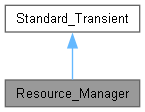
Defines a resource structure and its management methods. More...
#include <Resource_Manager.hxx>
Public Member Functions | |
| Resource_Manager (const char *const aName, const bool Verbose=false) | |
Create a Resource manager. Attempts to find the two following files: $CSF_aNameDefaults/aName $CSF_aNameUserDefaults/aName and load them respectively into a reference and a user resource structure. | |
| Resource_Manager () | |
| Create an empty Resource manager. | |
| Resource_Manager (const TCollection_AsciiString &theName, const TCollection_AsciiString &theDefaultsDirectory, const TCollection_AsciiString &theUserDefaultsDirectory, const bool theIsVerbose=false) | |
| Create a Resource manager. | |
| bool | Save () const |
| Save the user resource structure in the specified file. Creates the file if it does not exist. | |
| bool | Find (const char *const aResource) const |
| returns True if the Resource does exist. | |
| bool | Find (const TCollection_AsciiString &theResource, TCollection_AsciiString &theValue) const |
| returns True if the Resource does exist. | |
| virtual int | Integer (const char *const aResourceName) const |
| Gets the value of an integer resource according to its instance and its type. | |
| virtual double | Real (const char *const aResourceName) const |
| Gets the value of a real resource according to its instance and its type. | |
| virtual const char * | Value (const char *const aResourceName) const |
| Gets the value of a CString resource according to its instance and its type. | |
| virtual const char16_t * | ExtValue (const char *const aResourceName) |
| Gets the value of an ExtString resource according to its instance and its type. | |
| virtual void | SetResource (const char *const aResourceName, const int aValue) |
| Sets the new value of an integer resource. If the resource does not exist, it is created. | |
| virtual void | SetResource (const char *const aResourceName, const double aValue) |
| Sets the new value of a real resource. If the resource does not exist, it is created. | |
| virtual void | SetResource (const char *const aResourceName, const char *const aValue) |
| Sets the new value of an CString resource. If the resource does not exist, it is created. | |
| virtual void | SetResource (const char *const aResourceName, const char16_t *const aValue) |
| Sets the new value of an ExtString resource. If the resource does not exist, it is created. | |
| NCollection_DataMap< TCollection_AsciiString, TCollection_AsciiString > & | GetMap (bool theRefMap=true) |
| Returns internal Ref or User map with parameters. | |
| bool | IsInitialized () const |
| Returns true if Resource have been found. | |
 Public Member Functions inherited from Standard_Transient Public Member Functions inherited from Standard_Transient | |
| Standard_Transient () | |
| Empty constructor. | |
| Standard_Transient (const Standard_Transient &) | |
| Copy constructor – does nothing. | |
| Standard_Transient & | operator= (const Standard_Transient &) |
| Assignment operator, needed to avoid copying reference counter. | |
| virtual | ~Standard_Transient ()=default |
| Destructor must be virtual. | |
| virtual const opencascade::handle< Standard_Type > & | DynamicType () const |
| Returns a type descriptor about this object. | |
| bool | IsInstance (const opencascade::handle< Standard_Type > &theType) const |
| Returns a true value if this is an instance of Type. | |
| bool | IsInstance (const char *const theTypeName) const |
| Returns a true value if this is an instance of TypeName. | |
| bool | IsKind (const opencascade::handle< Standard_Type > &theType) const |
| Returns true if this is an instance of Type or an instance of any class that inherits from Type. Note that multiple inheritance is not supported by OCCT RTTI mechanism. | |
| bool | IsKind (const char *const theTypeName) const |
| Returns true if this is an instance of TypeName or an instance of any class that inherits from TypeName. Note that multiple inheritance is not supported by OCCT RTTI mechanism. | |
| Standard_Transient * | This () const |
| Returns non-const pointer to this object (like const_cast). For protection against creating handle to objects allocated in stack or call from constructor, it will raise exception Standard_ProgramError if reference counter is zero. | |
| int | GetRefCount () const noexcept |
| Get the reference counter of this object. | |
| void | IncrementRefCounter () noexcept |
| Increments the reference counter of this object. Uses relaxed memory ordering since incrementing only requires atomicity, not synchronization with other memory operations. | |
| int | DecrementRefCounter () noexcept |
| Decrements the reference counter of this object; returns the decremented value. Uses release ordering for the decrement to ensure all writes to the object are visible before the count reaches zero. An acquire fence is added only when the count reaches zero, ensuring proper synchronization before deletion. This is more efficient than using acq_rel for every decrement. | |
| virtual void | Delete () const |
| Memory deallocator for transient classes. | |
Static Public Member Functions | |
| static void | GetResourcePath (TCollection_AsciiString &aPath, const char *const aName, const bool isUserDefaults) |
| Gets the resource file full path by its name. If corresponding environment variable is not set or file doesn't exist returns empty string. | |
| Static Public Member Functions inherited from Standard_Transient | |
| static constexpr const char * | get_type_name () |
| Returns a type descriptor about this object. | |
| static const opencascade::handle< Standard_Type > & | get_type_descriptor () |
| Returns type descriptor of Standard_Transient class. | |
Additional Inherited Members | |
| Public Types inherited from Standard_Transient | |
| typedef void | base_type |
| Returns a type descriptor about this object. | |
Defines a resource structure and its management methods.
Create a Resource manager. Attempts to find the two following files: $CSF_aNameDefaults/aName $CSF_aNameUserDefaults/aName and load them respectively into a reference and a user resource structure.
If CSF_ResourceVerbose defined, seeked files will be printed.
FILE SYNTAX The syntax of a resource file is a sequence of resource lines terminated by newline characters or end of file. The syntax of an individual resource line is:
| Resource_Manager::Resource_Manager | ( | ) |
Create an empty Resource manager.
| Resource_Manager::Resource_Manager | ( | const TCollection_AsciiString & | theName, |
| const TCollection_AsciiString & | theDefaultsDirectory, | ||
| const TCollection_AsciiString & | theUserDefaultsDirectory, | ||
| const bool | theIsVerbose = false ) |
Create a Resource manager.
| [in] | theName | description file name |
| [in] | theDefaultsDirectory | default folder for looking description file |
| [in] | theUserDefaultsDirectory | user folder for looking description file |
| [in] | theIsVerbose | print verbose messages |
Gets the value of an ExtString resource according to its instance and its type.
returns True if the Resource does exist.
| bool Resource_Manager::Find | ( | const TCollection_AsciiString & | theResource, |
| TCollection_AsciiString & | theValue ) const |
returns True if the Resource does exist.
| NCollection_DataMap< TCollection_AsciiString, TCollection_AsciiString > & Resource_Manager::GetMap | ( | bool | theRefMap = true | ) |
Returns internal Ref or User map with parameters.
|
static |
Gets the resource file full path by its name. If corresponding environment variable is not set or file doesn't exist returns empty string.
Gets the value of an integer resource according to its instance and its type.
|
inline |
Returns true if Resource have been found.
Gets the value of a real resource according to its instance and its type.
| bool Resource_Manager::Save | ( | ) | const |
Save the user resource structure in the specified file. Creates the file if it does not exist.
|
virtual |
Sets the new value of an CString resource. If the resource does not exist, it is created.
|
virtual |
Sets the new value of an ExtString resource. If the resource does not exist, it is created.
|
virtual |
Sets the new value of a real resource. If the resource does not exist, it is created.
|
virtual |
Sets the new value of an integer resource. If the resource does not exist, it is created.
Gets the value of a CString resource according to its instance and its type.
 1.10.0