 |
Open CASCADE Technology Reference Manual 8.0.0
|
Loading...
Searching...
No Matches
|
Open CASCADE Technology Reference Manual 8.0.0
|
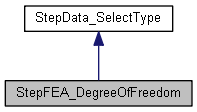
Representation of STEP SELECT type DegreeOfFreedom. More...
#include <StepFEA_DegreeOfFreedom.hxx>
Public Member Functions | |
| StepFEA_DegreeOfFreedom () | |
| Empty constructor. | |
| int | CaseNum (const occ::handle< Standard_Transient > &ent) const override |
| Recognizes a kind of CurveElementFreedom select type return 0. | |
| int | CaseMem (const occ::handle< StepData_SelectMember > &ent) const override |
| Recognizes a items of select member CurveElementFreedomMember 1 -> EnumeratedCurveElementFreedom 2 -> ApplicationDefinedDegreeOfFreedom 0 else. | |
| occ::handle< StepData_SelectMember > | NewMember () const override |
| Returns a new select member the type CurveElementFreedomMember. | |
| void | SetEnumeratedDegreeOfFreedom (const StepFEA_EnumeratedDegreeOfFreedom aVal) |
| Returns Value as EnumeratedDegreeOfFreedom (or Null if another type) | |
| StepFEA_EnumeratedDegreeOfFreedom | EnumeratedDegreeOfFreedom () const |
| Returns Value as EnumeratedDegreeOfFreedom (or Null if another type) | |
| void | SetApplicationDefinedDegreeOfFreedom (const occ::handle< TCollection_HAsciiString > &aVal) |
| Set Value for ApplicationDefinedDegreeOfFreedom. | |
| occ::handle< TCollection_HAsciiString > | ApplicationDefinedDegreeOfFreedom () const |
| Returns Value as ApplicationDefinedDegreeOfFreedom (or Null if another type) | |
 Public Member Functions inherited from StepData_SelectType Public Member Functions inherited from StepData_SelectType | |
| bool | Matches (const occ::handle< Standard_Transient > &ent) const |
| Returns True if the Type of an Entity complies with the definition list of the SelectType. Also checks for a SelectMember Default Implementation looks for CaseNum or CaseMem positive. | |
| void | SetValue (const occ::handle< Standard_Transient > &ent) |
| Stores an Entity. This allows to define a specific SelectType class with one read method per member Type, which returns the Value casted with the good Type. | |
| void | Nullify () |
| Nullifies the Stored Entity. | |
| const occ::handle< Standard_Transient > & | Value () const |
| Returns the Stored Entity. Can be used to define specific read methods (see above) | |
| bool | IsNull () const |
| Returns True if there is no Stored Entity (i.e. it is Null) | |
| occ::handle< Standard_Type > | Type () const |
| Returns the Effective (Dynamic) Type of the Stored Entity If it is Null, returns TYPE(Transient) | |
| int | CaseNumber () const |
| Recognizes the Type of the stored Entity, or zero if it is Null or SelectMember. Calls the first method CaseNum on Value. | |
| virtual occ::handle< StepData_PDescr > | Description () const |
| Returns the Description which corresponds to <me> Null if no specific description to give. This description is used to control reading an check validity. Default returns a Null Handle, i.e. undefined description It can suffice if CaseNum and CaseMem give enough control. | |
| int | CaseMember () const |
| Returns the Type of the stored SelectMember, or zero if it is Null or Entity. Calls the method CaseMem on Value. | |
| occ::handle< StepData_SelectMember > | Member () const |
| Returns Value as a SelectMember. Null if not a SelectMember. | |
| const char * | SelectName () const |
| Returns the type name of SelectMember. If no SelectMember or with no type name, returns an empty string To change it, pass through the SelectMember itself. | |
| int | Int () const |
| This internal method gives access to a value implemented by an Integer (to read it) | |
| void | SetInt (const int val) |
| This internal method gives access to a value implemented by an Integer (to set it) : a SelectMember MUST ALREADY BE THERE ! | |
| int | Integer () const |
| Gets the value as an Integer. | |
| void | SetInteger (const int val, const char *const name="") |
| Sets a new Integer value, with an optional type name Warning : If a SelectMember is already set, works on it : value and name must then be accepted by this SelectMember. | |
| bool | Boolean () const |
| void | SetBoolean (const bool val, const char *const name="") |
| StepData_Logical | Logical () const |
| void | SetLogical (const StepData_Logical val, const char *const name="") |
| double | Real () const |
| void | SetReal (const double val, const char *const name="") |
| virtual | ~StepData_SelectType () |
Representation of STEP SELECT type DegreeOfFreedom.
| StepFEA_DegreeOfFreedom::StepFEA_DegreeOfFreedom | ( | ) |
Empty constructor.
| occ::handle< TCollection_HAsciiString > StepFEA_DegreeOfFreedom::ApplicationDefinedDegreeOfFreedom | ( | ) | const |
Returns Value as ApplicationDefinedDegreeOfFreedom (or Null if another type)
|
overridevirtual |
Recognizes a items of select member CurveElementFreedomMember 1 -> EnumeratedCurveElementFreedom 2 -> ApplicationDefinedDegreeOfFreedom 0 else.
Reimplemented from StepData_SelectType.
|
overridevirtual |
Recognizes a kind of CurveElementFreedom select type return 0.
Implements StepData_SelectType.
| StepFEA_EnumeratedDegreeOfFreedom StepFEA_DegreeOfFreedom::EnumeratedDegreeOfFreedom | ( | ) | const |
Returns Value as EnumeratedDegreeOfFreedom (or Null if another type)
|
overridevirtual |
Returns a new select member the type CurveElementFreedomMember.
Reimplemented from StepData_SelectType.
| void StepFEA_DegreeOfFreedom::SetApplicationDefinedDegreeOfFreedom | ( | const occ::handle< TCollection_HAsciiString > & | aVal | ) |
Set Value for ApplicationDefinedDegreeOfFreedom.
| void StepFEA_DegreeOfFreedom::SetEnumeratedDegreeOfFreedom | ( | const StepFEA_EnumeratedDegreeOfFreedom | aVal | ) |
Returns Value as EnumeratedDegreeOfFreedom (or Null if another type)
 1.10.0