OCCT 6.7.1 is released!

Mon, 05/05/2014 - 16:09
Forums:
Hello All,
The release of OCCT 6.7.1 is published.
The corresponding tag in Git is "V6_7_1". Note that this time it is not part of the master branch but a separate one.

Collaborative development portal
Hello All,
The release of OCCT 6.7.1 is published.
The corresponding tag in Git is "V6_7_1". Note that this time it is not part of the master branch but a separate one.
Hello,
This year we are going to concentrate first on a task which perhaps is the longest-pending one in OCCT development - overall refactoring of the code and build system, getting rid of WOK and CDL.
This change will form a basis of the next OCCT version, 7.0.
Hello,
This is to share some details on new items in OCCT documentation to appear in 6.7.1 and 6.8.0, which may be interesting to some people:
Hello All,
During preparation of OCCT 6.7.0 we have made some improvements related to performance and stability of the code which I would like to describe here.
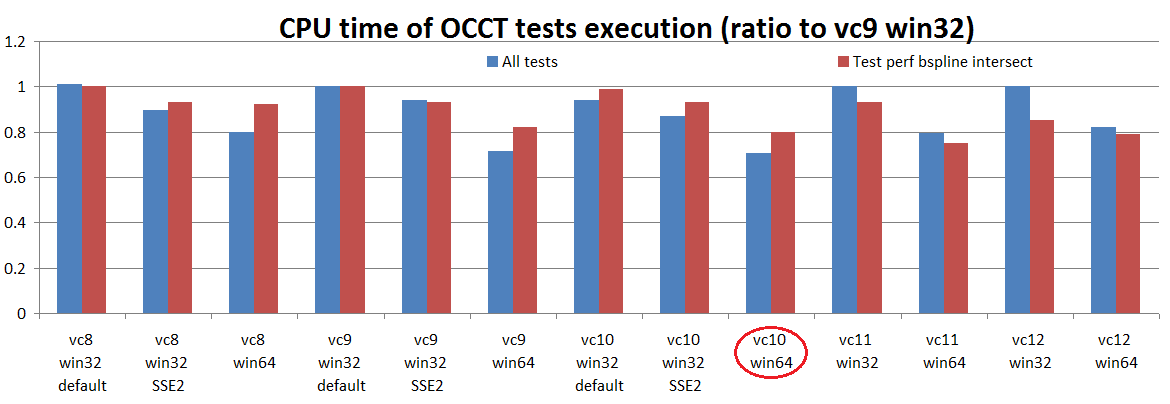
Inspired by advice of our contributors, we have checked possibility to improve performance by tweaking relevant compiler options. The analysis was limited to Visual Studio compilers (used by most of our customers). Here is a summary chart comparing different versions of VC++ on OCCT code.

As implementation of one of the strategic steps in OCCT visualization component development road-map, support for GLSL shader programs has been added in Open CASCADE Technology 6.7.0.
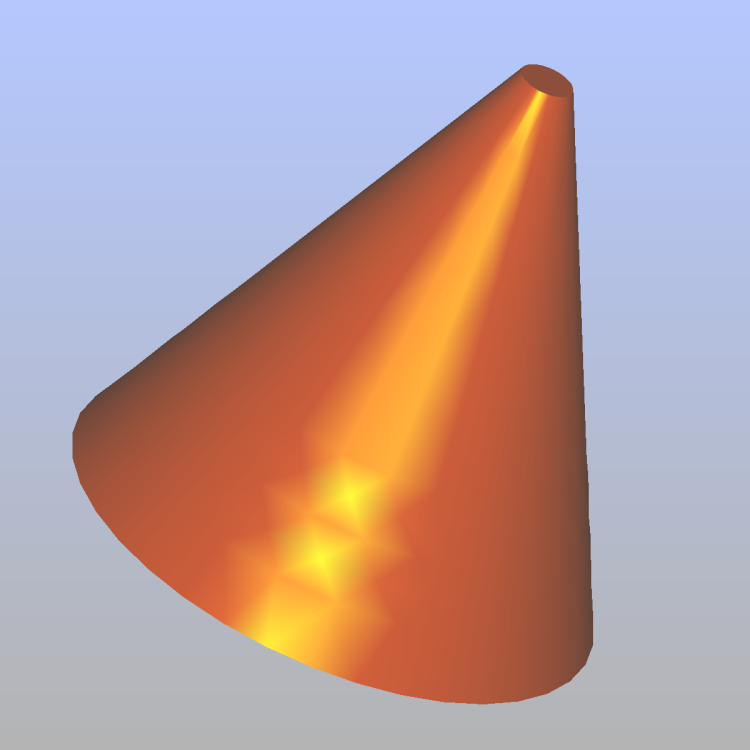
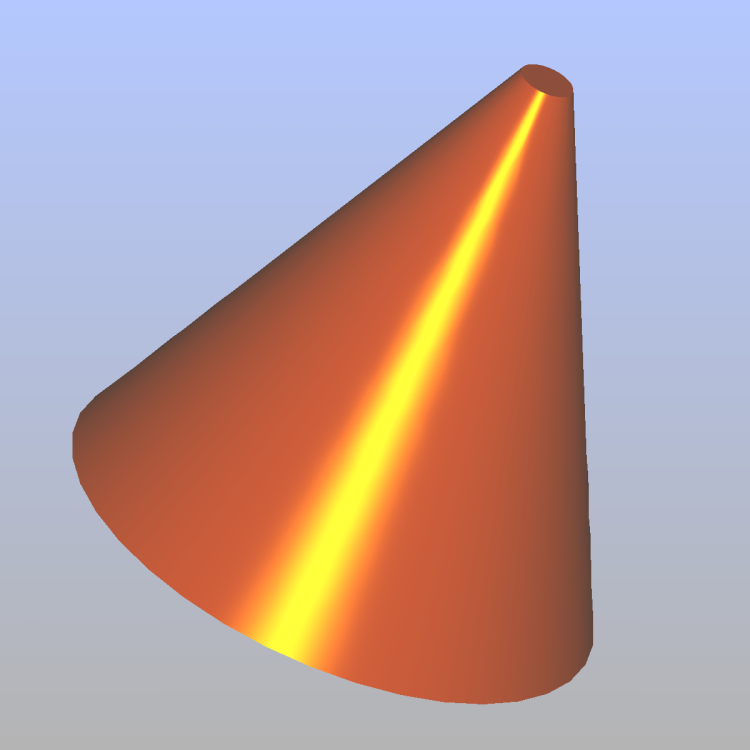
Shader programs have become a part of aspect classes in Graphic3d package, thus application developers can provide individual shader programs for all supported kinds of graphic primitives: points, lines, shaded polygons and text.
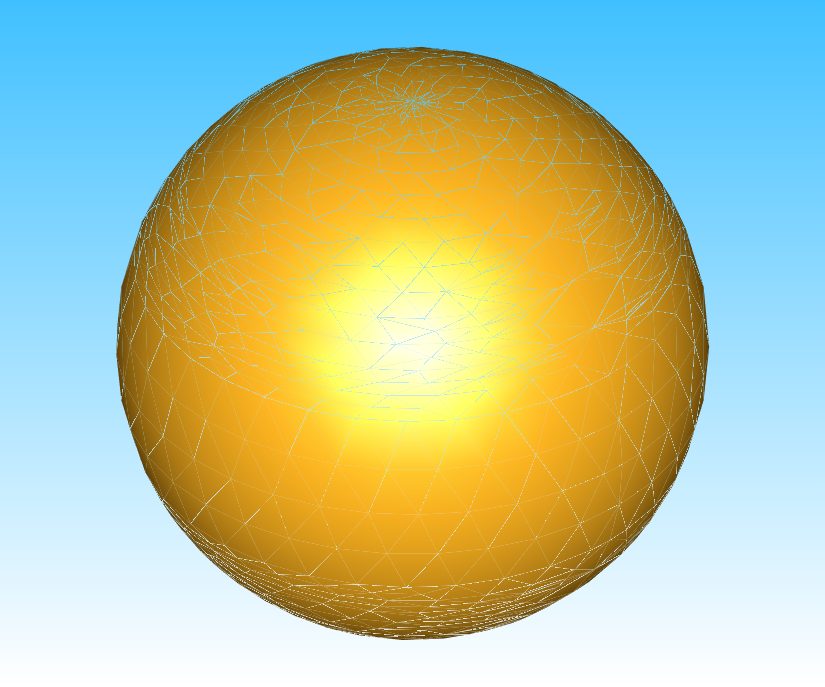
Enabling anti-aliasing with help of V3d_View::SetAntialiasingOn() call for a scene containing shaded polygons often results in problems illustrated by the snapshot below:
Hello,
With OCCT 6.7.0 we introduce the new documentation system. All OCCT documentation (Overview, User and Developer Guides) is now included in OCCT source tree (new sub-folder dox), in plain text format (MarkDown with Doxygen extensions). The HTML, CHM, and PDF files are generated using Doxygen.
This makes it easy to make changes in OCCT documentation, and enables OCCT developers and contributors to synchronize changes in the code with corrections in relevant documentation.
OCCT 6.7.0 introduces several major improvements of the visualization component. One of the most breaking changes in OCCT visualization concerns simplified implementation of ray tracing algorithm for regular OCCT visualization primitives. This algorithm is implemented using OpenCL. Being a part of TKOpenGl library, it is fully integrated with standard OCCT visualization logic. From now on, ray tracing can be used as alternative rendering method instead of OpenGL rasterization.
Clipping visualized 3D models with user-defined clipping planes is one of basic OpenGL features that allows the user to look inside the models.
However, in some cases it is more interesting to investigate the cross-section shape rather than the model's internals. For this purpose, the cross-section should be visualized in shading using some distinctive visual attributes (specific color, hatching).

Originally, the OCCT persistence was based on an object oriented database. In order to control what is actually stored, the applications had to define a database schema by mean of a set of persistent classes - classes inheriting from Persistent such as the ones from the PGeom and PTopoDS packages - then to bind their (transient) data model to this database schema through conversion drivers (e.g. MgtGeom, MgtTopoDS) - see Foundation Classes User's Guide chapter 5, Data Storage.